Download this article, Mule Deer and La Jolla Seals
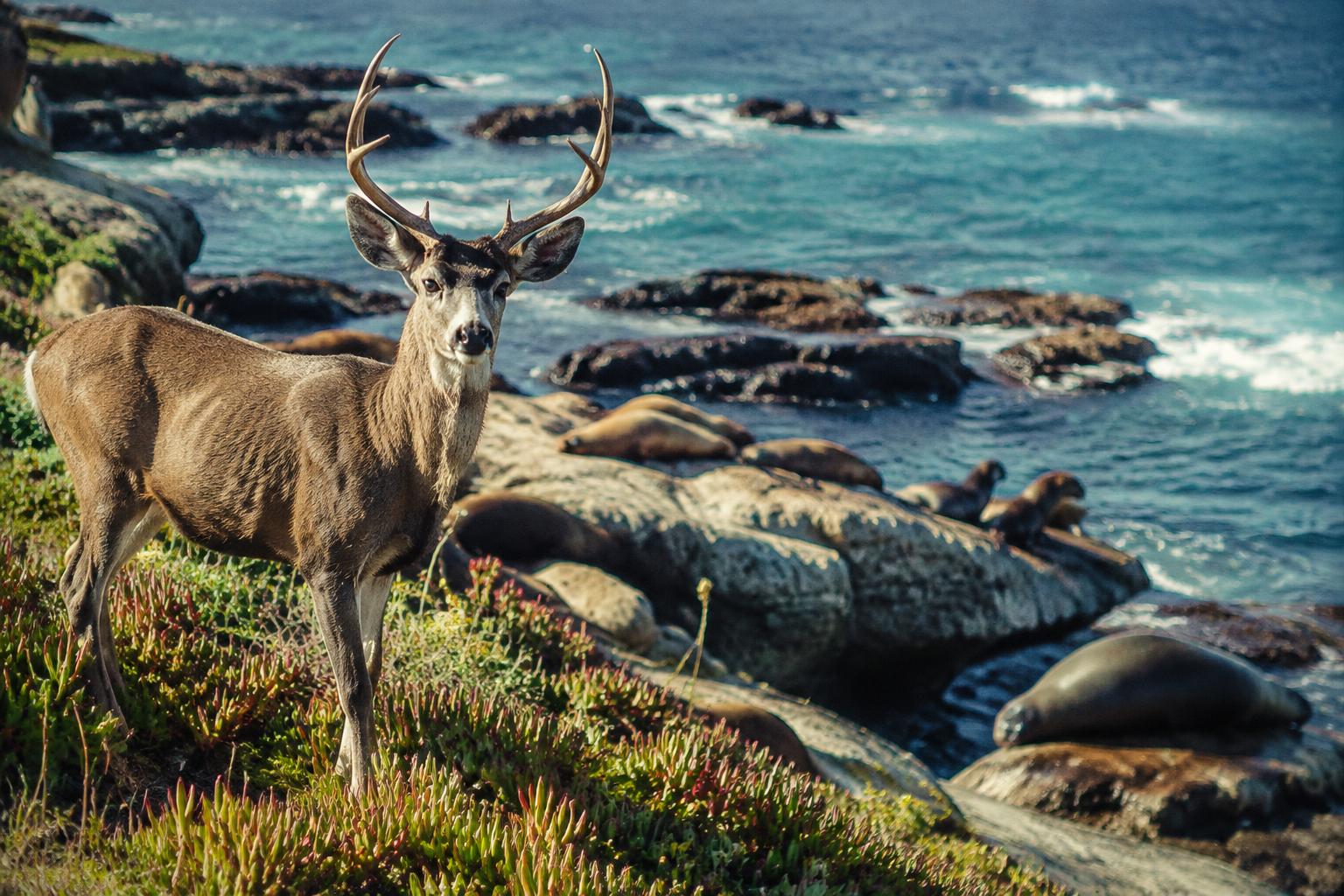
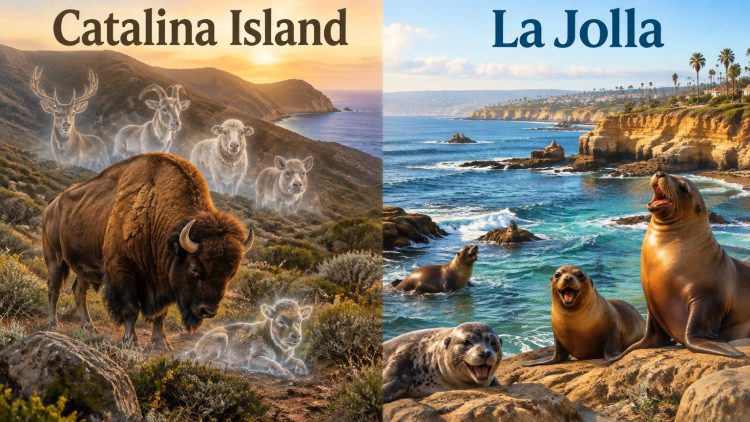
Catalina Island Mule Deer and La Jolla’s Seal and Sea Lions Ecology Fail: The expensive art of congratulating yourself while continuing to deceive the public by repeating yesterdays mistakes one day at a time.
California has mastered the art of announcing its environmental virtue through gaslighting, spin, and backdoor decisions straight out of a Psychology 101 textbook on eco-narcissistic behavior. They keep boasting about environmental wins; then, when scrutinized, they backpedal, deny, and put the blame on another bureaucratic department or public organization. Or they just flat-out repeat what we have all heard a zillion times: Climate Change.
We see this behavior all the time in press conferences, ambitious promises, and enough self-congratulation to fill a hundred fertilizer plants. All this while knowing the consequences tend to arrive later, accompanied by consultants, litigation, and an explanation of why everything is terribly complicated and messed up at the expense of taxpayers.
Consider the Delta smelt. Trillions of gallons of water are diverted to the sea—water deliveries are restricted to farmers to protect a struggling fish, yet its population continues to struggle. That does not prove water protections are useless; it does prove that declaring a policy virtuous is easier than making an entire ecosystem recover. Agriculture gets uncertainty, high costs, higher food costs, and job losses, and conservation receives disappointing results. Meanwhile, everyone gets another meeting or media headlines on the next plausible remedy.
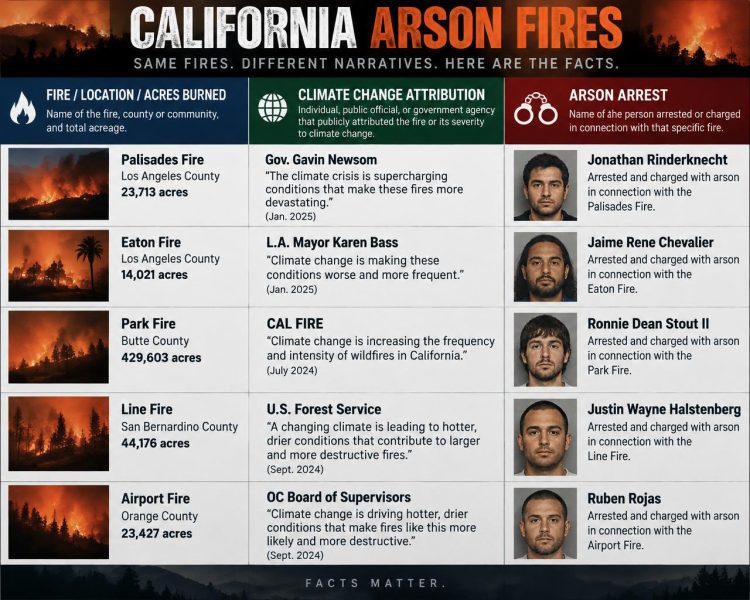
Then we have probably the most destructive forces in the state: forest fires and wildfires, which have caused billions in damage, hundreds of lives lost, and millions of acres destroyed. Each time a press conference is called, it’s always nature’s fault or some other lame excuse, like blaming others. L.A. Mayor Karen Bass fired the DEI-hired fire chief, Kristin Crowley, when she pointed the blame at Karen Bass. The blame game went back and forth for months, and the public got whiplash trying to figure out who was at fault.
Decades of fire suppression and failed eco-policies have contributed to dangerous fuel accumulation in many California forests, alongside natural drought, lightning strikes, downed power lines, and arson. But here’s California’s spin: fires do not all follow the same script; wind-driven fires in Southern California shrublands and neighborhoods cannot simply be blamed on neglected forests. Or can they?
The January 2025 Palisades Fire is the perfect example, with its own infrastructure embarrassment: an empty Santa Ynez Reservoir that caused drip-free hydrants. Now add cutting the fire department budget by millions and a boneyard of nonoperational fire trucks and equipment. Those failures deserve scrutiny, but California keeps gaslighting, pretending one full reservoir would not have stopped a wind-driven catastrophe, and has the audacity to blame plants.
Then we have the arson, which always gets buried after weeks of blaming the fallback, “climate change.” The gullible and very naïve public gets the cover story until headlines suddenly focus on an arrest. Then it’s, let’s move on to: who can we blame next?
California provides more than enough legitimate material for criticism and willful failure. There is no need to manufacture extra.
Which brings us to Catalina Island and La Jolla, where humans changed the Circle of Life, watched the damage to native habitat for years, and eventually discovered that undoing the arrangement would be expensive, controversial, embarrassing, unpleasant, and politically unelectable.
What could possibly go wrong with releasing predators onto an island or coast that already had an ecological balance and biodiversity for thousands of years?
Let me introduce you to California, where the attitude is: Let’s make it better by making it worse and get elected by saying, “I will correct it.”
Biology 101: Apparently an Advanced Subject in the Circle of Life to California
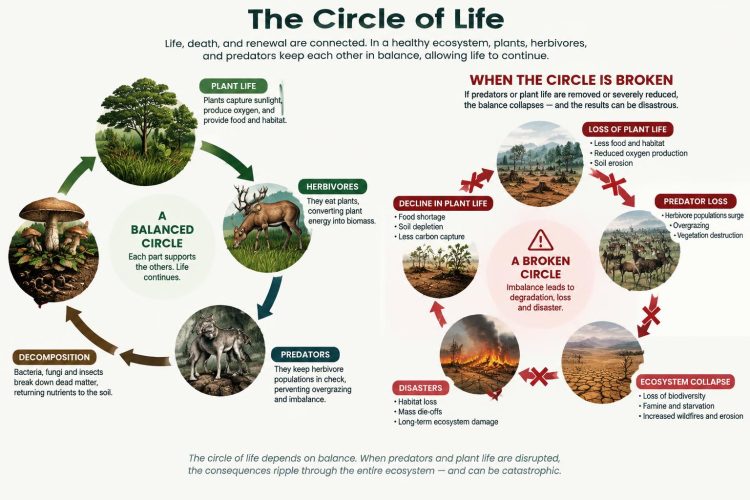
Before we get into Catalina and La Jolla, let’s go back and review our Biology 101 class that many of us took in middle school. The basic Circle of Life is not mysterious or complex.
The concept of the “Circle of Life” was introduced back in 1935 and 1942 by two well-known eco-gurus, Arthur Tansley and Raymond Lindeman. Their conclusions spread faster than a California wildfire.
With that said, without plants or predators, the Circle of Life chain is broken and LIFE DIES.
Plants capture sunlight and convert it into food. Herbivores consume plants. Predators consume other animals. Decomposers break down dead material and return nutrients to the soil. Pollinators and seed dispersers help vegetation reproduce and spread.
Five fairly simple, short sentences with common sense, logic, and facts—but those are taboo words to California.
None of these organisms needs a human strategy, bureaucratic offices, or organizations. In fact, Mother Nature did a damn good job developing both areas … well, at least at the beginning, until California humans thought they were smarter than Mother Nature.
Vegetation, whether it’s on dry or wet land, is the foundation. Predators are the roof; remove either, and you have broken the chain of the Circle of Life or created an eco-disaster. The familiar “Circle of Life” is a useful shorthand metaphor, although a food web is more accurate than a tidy circle. Nutrients cycle through the system; energy flows through it and must continually be replenished, principally by sunlight captured through photosynthesis.
Remove the plant community, and the damage spreads:
- Plant-eating animals lose food.
- Animals lose vegetation used for shelter and nesting.
- Predators lose prey as other populations decline.
- Decomposers eventually receive less newly produced organic material.
Recycling nutrients cannot replace the production of food. A compost heap is useful, but it cannot photosynthesize its way out of nature’s assignment.
Normally, losing one plant species is not equivalent to losing all vegetation. But still, allowing many distinctive native plant communities, including plants on the endangered list, to be raped by human-planted predators and steadily eaten will destroy the natural habitat, and that is hardly a conservation triumph.
Predators can and will also disrupt the roof of an ecosystem, either big or small. Some herbivores may become more abundant or change where they feed, increasing pressure on vegetation. Smaller predators may also increase when larger predators no longer suppress them.
The results vary by ecosystem. Nature does not promise the same outcome every time someone changes the cast and script, but California keeps editing the script from nature’s proven storyline.
| Change | What Is Disrupted | Potential Consequences |
|---|---|---|
| Loss of the plant community | The food web’s principal source of new food energy | Food shortages, habitat loss, and declines across animal populations |
| Introduction of large predators | Smaller food sources and sometimes smaller predators | Changes in animal abundance, behavior, and pressure on vegetation |
| Introduction of large herbivores | Existing relationships between vegetation and consumers | Excessive browsing where effective population checks are absent |
La Jolla belongs primarily in the second row. It had a balance of “natural” large predators.
Catalina belongs primarily in the third row. It had a balance of “natural” large herbivores.
Now open either door two or door three to tip the balance, and we get door number one.
Catalina: Bring the Domestic Predators, Figure Out the Ecosystem Later
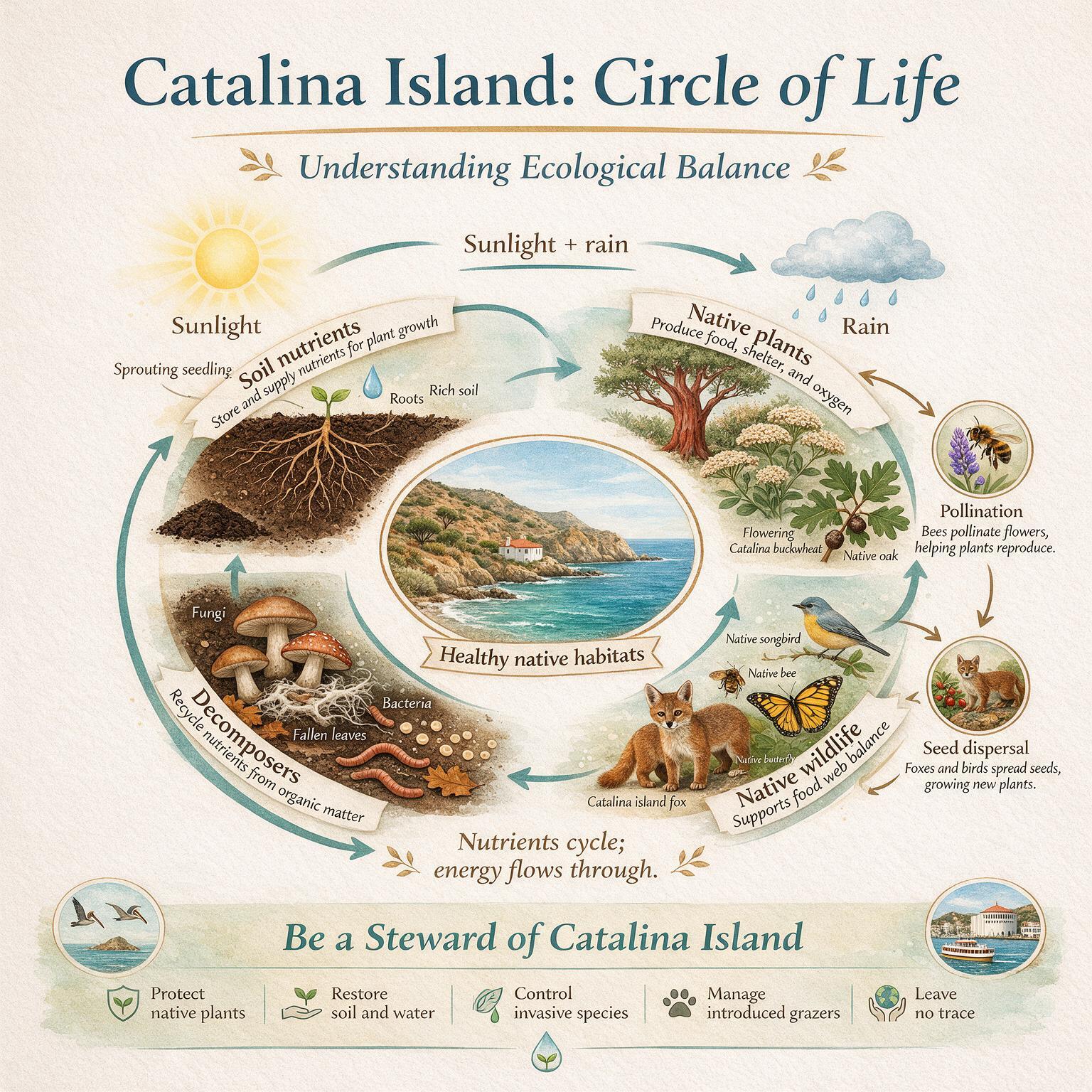
Santa Catalina Island had thousands of years of Indigenous history before 1892, when the Banning brothers—William, Joseph, and Hancock—took possession of Catalina. They later sold a controlling interest in the Santa Catalina Island Company to William Wrigley Jr., the chewing-gum businessman and Chicago Cubs owner. He added infrastructure, homes, docks, hotels, etc., for vacationers.
In 1971, the family established the Catalina Island Conservancy to protect the island’s land and wildlife, then donated about 88% of the island in 1975 to the Conservancy, a 501(c)(3) nonprofit private land trust dedicated to conservation, education, and public recreation. They then made a deal with Los Angeles to allow public access and preservation.
Catalina is famous for sparkling water, dramatic hillsides, and the kind of scenery that makes people say, “We should really protect this.” As we will later learn, they confused the meaning of “protect” with “abuse.” I believe it’s called semantic paraphasia.
Its native island predator, the fox, weighs only a few pounds. It eats small prey and fruit and helps disperse seeds, and for hundreds of years helped keep Catalina in sync with the Circle of Life.
Protecting foxes matters. Assigning them an imaginary animal-management job does not, and expecting them to work with other predators tips a balanced ecosystem toward overpopulation and then eco-destruction.
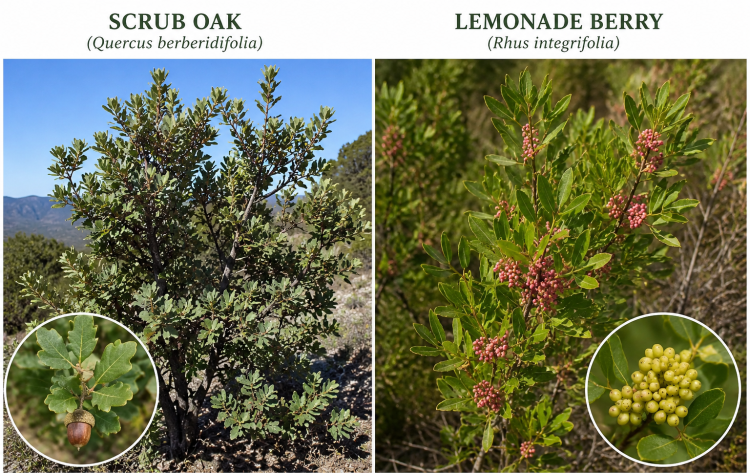
The island’s native chaparral, coastal scrub, and woodlands support distinctive plants and wildlife. Some plants occur naturally nowhere else. These communities developed without the sustained pressure of the large introduced grazers and browsers that humans later supplied.
In its ecological history, Catalina was the perfect example of the Circle of Life: over thousands of years, it established a remarkable native ecosystem.
Then someone said back in the mid-to-late 1800s, “Let’s screw nature up,” and shortly before that introduced something with hooves without one fur hair’s worth of thought about the consequences.
Afterward, they spent decades—and millions—managing what someone once considered an excellent eco-idea while organizations and bureaucrats got media fame over an eco-matter they knew nothing about.
Catalina’s ecological troubles did not begin with the madness of the deer alone, as the media claims. Humans thought it was so cool to plant goats, sheep, pigs, and bison through what was, at first, harmless ranching, hunting, and entertainment.
Little did they know, these animals became invasive, a major no-no in the Circle of Life.
And to be fair, at the time, eco-management was just a pseudoword.
Goats and Sheep: Long-Lasting Grazing Pressure
 Goats were introduced around 1827 for commercial ranching. Everyone knows goats are herbivores (think of it as the human equivalent of vegans), but when ranching proved unprofitable, they were left to fend for themselves.
Consequently, they multiplied into large feral herds. Even back then, goats were known to be particularly damaging to vulnerable native vegetation without some sort of eco-management.
So, over a hundred years later, by 2000, that eco-dunce light turned on, and the first solution was an attempt at capture and relocation, which did not work out. The final solution: organized hunting parties, or just make it open season. Hunting got so crazy that up until the mid-1970s, hunters were shooting them off cliffs from small boats. The key was hoping they would fall into the water, where they could be picked up and barbecued or just left for sharks, which would help fulfill the Circle of Life in the ocean world.
Yahoo. Thanks for doing your part for nature.
Even if their eventual eradication removed an important source of browsing pressure, it did not automatically restore damaged plant life.
So, what did these eco-dummies do? They added more herbivores, a wolf in sheep’s clothing.
Sheep arrived around the mid-1800s for ranching and, like goats, played another historical role as commercial livestock. And for the second time, that eco-light in these idiots lit up when plant life was suddenly vanishing.
Now, before we go much farther, goats and sheep are good for the ecology: when they graze, they usually eat plants to the base, thus allowing new growth. Probably the most famous movie about this conflict between sheep and cattle ranchers is The Sheepman (1958), a highly acclaimed Western comedy starring Glenn Ford and Shirley MacLaine.
Now the IRONY. California, with a nano-ounce of common sense, is NOW using goats and sheep to fight wildfires because they clear out brush, which provides fuel for these explosive wildfires.
But wait! Common sense is taboo to California; instead, let’s add more severe eco-damage with Bacon.
Bacon: A Double Order, Please: Disturbing the Soil as Well as the Plants
Pigs were introduced around the 1930s. Some historical accounts describe their introduction as an effort to control rattlesnakes (wild boars do hunt, stomp, and consume them, but they are not used for snake control). Unlike goats and sheep, they are far more ruthless, altering nature’s habitat through rooting, not simply by eating vegetation. Their digging damaged plants beyond rejuvenation and exposed soil to erosion, or loss of fertile topsoil: erosion strips away the nutrient-rich top layer of soil, decreasing soil fertility and making it hard for crops, trees, and plants to grow.
Of course, the bad thing about pigs is that they breed like rabbits. Oh my, lots of pig porn going on.
With that said, their eradication started at the beginning of 1990 and was completed in 2004, with more than 12,000 removed in a sustained program involving trapping and ground hunting.
Again, California illustrated its eco-narcissism, boasting that this was an important step in conservation reality. The naïve public believed it and sucked it down like a shot of rotgut tequila.
Now the Media-Hyped Mule Deer: An Introduced Herbivore Without a Native Predator
The mule deer started all the controversy. They did not swim there and were forced to apply for residency.
The deer were just another book added to the library of non-native herbivore problems.
About ten were introduced to Catalina for hunting around the late 1920s and early 1930s, and within ten years their number grew to over 10,000.
Author’s note: Now, these for-profit “Private Hunting Reserves” are throughout the U.S. and the world. And normally, the owners of these exclusive resorts are very anal: they restrict permits so overpopulation does not happen and make sure the animals have enough food and do not strip the area of native vegetation. Many times, they drop off hay, corn, and other natural edibles. In some places, like Africa, these hunting expeditions can cost thousands. The money made helps finance conservation and fight poachers; animals that are hunted are not normally healthy or young unless there is overpopulation. Otherwise, they are old or sick. Also, it’s normal for hunting (harvesting) to focus primarily on males because it is a common and intentional wildlife-management strategy, especially for polygamous species like deer, elk, and other ungulates.
Now, getting back. The state figured it would make millions off hunting licenses, and of course, hunting would control the populations. And of course (and as expected), animal-rights gurus, around the mid-1970s, started raising hell in their overall role of opposing the hunting of all the animals … so humans said, let’s forget or limit that form of animal control for now.
The island had no native predator capable of regulating a deer population—the deer were trapped on an island. They could not migrate to another landscape when food became scarce.
When food became scarce, the deer would leave nothing on the plate. Instead of getting their tummies full with an abundant smorgasbord of plants and shrubs where they could pick and choose what suited their tastes, they now had to forage for food, so they ate everything in sight, right down to the roots and more.
Then the double hit: this left vegetation to serve as the new predator, as a population-control mechanism.
By the time humans saw the food-shortage problem, the herbivore population had caused damage that many are claiming was beyond repair.
So here we have it: The Eco Grand Slam of Eco-Disaster. Browsing by goats, sheep, pigs, and deer can:
- Consume seedlings before shrubs and trees become established.
- Suppress the recovery of native vegetation after disturbance.
- Reduce plant cover and habitat available to other wildlife.
- Contribute to conditions that favor invasive plants.
- Compound erosion problems where vegetation is already degraded.
Humans are blind to nature’s aftermath. Nature has a poor public-relations department.
Damn, My Bad, I Almost Forgot the Bison: The Movie Stars of Eco-Mismanagement
Now this is the one that becomes the most irritating, with the end results being the saddest.
Bison, like the others, were never part of Catalina’s original ecosystem, and they were never a part of California’s ecosystem.
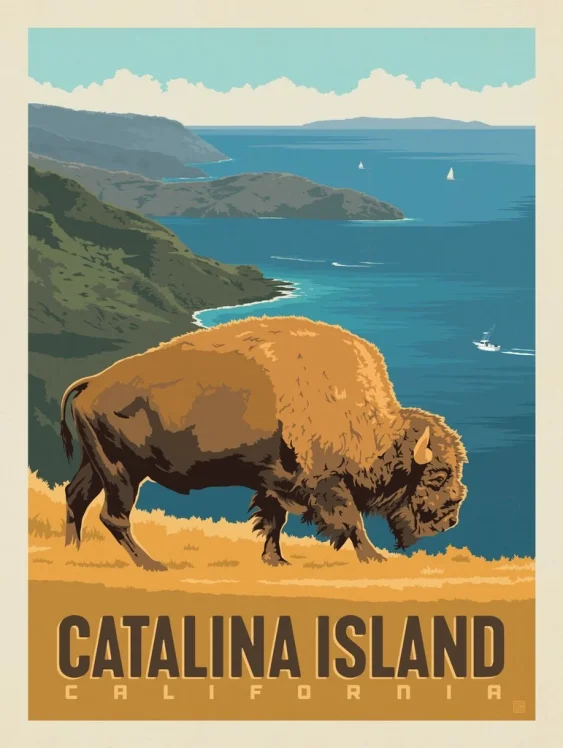 It all started back in 1924 when Hollywood shipped in about 14 bison for a movie.
Now here is the ironic part: The bison were never used, so they were simply released onto the island’s hillsides. Once production wrapped, the film crew left them behind because shipping 1,500-pound animals back to the mainland on water barges was deemed too difficult and very costly. Historically, when non-native animals are used in a movie, they get shipped back to where they came from.
Bison were dumped like a used condom.
So, with a stroke of more bad luck, these beasts of burden suddenly got a new job: they became an enduring cultural attraction for tourism.
Perfect, the marketing hype became: Come see the Bison on Catalina.
But all is not lost. In 1971, the bison debuted their acting ability in the movie, Bless the Beasts and the Children, directed by Stanley Kramer.
Fittingly, but with more irony, the movie centers on a group of young boys trying to save a captive herd of bison from being slaughtered.
What a bizarre paradox.
And as expected, their population expanded, causing more environmental harm. But instead of removing them because they had become overnight movie stars and tourist attractions, this time the solution was (you won’t believe this bad luck): let’s sterilize them.
How fricking brilliant! And I mean that in a very sarcastic way.
So, in 2009, eco-managers began using a contraceptive vaccine to reduce births.
That program almost became another eco-fail when reproductive effects lasted longer than anticipated.
This is the part that really kills me.
It took thirteen years, until 2022, to realize that there had been no calves since 2013, even after contraception was scaled back in 2015.
Obviously, someone needed a crash course in Birth Control 101.
Now, the approximately 80 animals reported in January 2025 represent a dated count, not a verified November 2026 census, but some now say it’s between 100 and 150. So much for birth control, or someone needs to go back to third-grade arithmetic.
So now, those daddies and mommies with iPhones and designer bottled water have to explain to their sad-eyed kids why there are no babies in the herds.
Everyone likes babies; they are so cute.
When you put the events together, this is quite an eco-résumé: import the problem, import more problems, watch the problems grow, politicize them, then develop a narcissist’s solution for the public to normalize it.
Final results: The vegetation got screwed, and animals got slaughtered or sterilized. What a great eco-friendly California we live in as we move on to another jewel of eco-failure, La Jolla, California.
La Jolla Is Just Another Catalina, But With Flippers
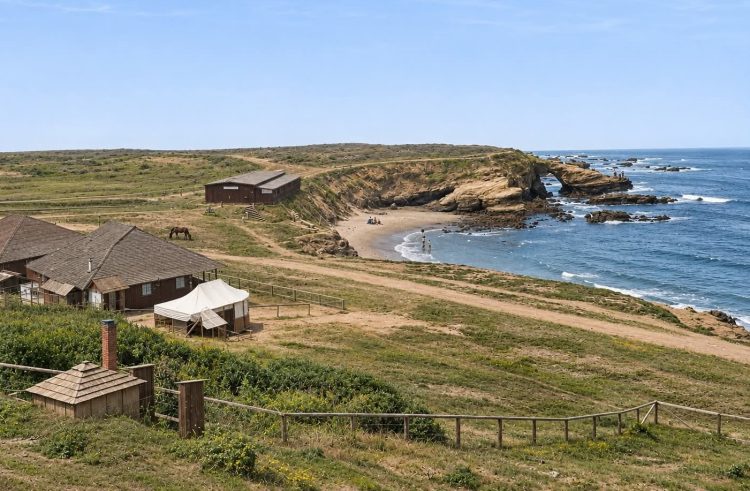
La Jolla (Spanish for “The Jewel”), California, was once a tiny beach community; then, starting in the late ’70s, it began changing into a growing metropolis of the rich and famous. La Jolla Cove, Boomer Beach, and Children’s Pool (the center of the controversy) cover only several square acres, with about twenty-five square miles of ocean—a far cry from Catalina’s thousands of acres and hundreds of square miles of ocean.
Hardly a comparison, as some would say; nevertheless, the area, like Catalina with its mule deer, has been the international focal point of the eco seal/sea lion controversy. That’s going to take a bit longer to explain due to the complexity and political runaround.
La Jolla is very unique in its geographical location. Its Point La Jolla (formerly Alligator Point) sticks out and borders on a huge ocean canyon. This canyon is known worldwide for its massive abundance of marine life. So much so that a pier was built about a mile and a half north of the Cove, as the seagull flies. We will get into how important this pier is shortly.
But first, I’m not going to give a detailed reason for La Jolla’s eco-nightmare; you can read about it in La Jolla Seals/Sea Lions Controversy.
But what I will do is summarize that article to provide the basics for this one.
A Quick Summary of Flippers
Like Catalina, La Jolla was just another perfect example of a perfectly ecologically balanced environment.
The root of the problem started in 1932, when a generous and wealthy woman, Ellen Browning Scripps (E. B. Scripps), built a breakwater at a place called The Casa (aka Children’s Pool) so kids would have a safe place to swim. It was put into a city trust, under which the city would maintain and protect it.
And for almost 100 years, that small pool for kids was a poster child of human/animal biodiversity.
Most importantly, seals and sea lions were a rarity; they were around, kept their distance from humans, and acted as observers in this equally balanced, biodiverse environment. Keep in mind, this was fully documented in a lengthy study done by marine oceanographers and archaeologists at Scripps Institution back in 1961, titled, Scripps Estate Site.
Between 1964 and 1972, three major human developments reshaped La Jolla’s relationship with marine life.
- SeaWorld opened in 1964, and shortly afterward it became associated with marine animal rescue and rehabilitation.
- The La Jolla Underwater Park was established in 1970.
- Two years later, the federal Marine Mammal Protection Act introduced broad protections for seals, sea lions, and other marine mammals.
Then, around 1982, it was discovered that SeaWorld was releasing and planting seals at the Children’s Pool, which caused the seal/sea lion population to explode.
The relevant question is not whether rescue work is inherently harmful. It is whether release practices and their ecological consequences have been adequately documented, which was the foundation of the seal war that started in the early 1990s.
By 2000, the Save the Seals movement was in full gallop, thanks to La Jolla’s becoming institutionalized.
La Jolla Becomes Institutionalized
In July 1912, a huge chunk of property owned by philanthropist E. B. Scripps was formally transferred to the Regents of the University of California, decades before UCSD existed. The Regents of the University of California then incorporated it into the Marine Biological Association of San Diego. Around 1914, construction began on the Ellen Browning Scripps Memorial Pier with funding from E. B. Scripps.
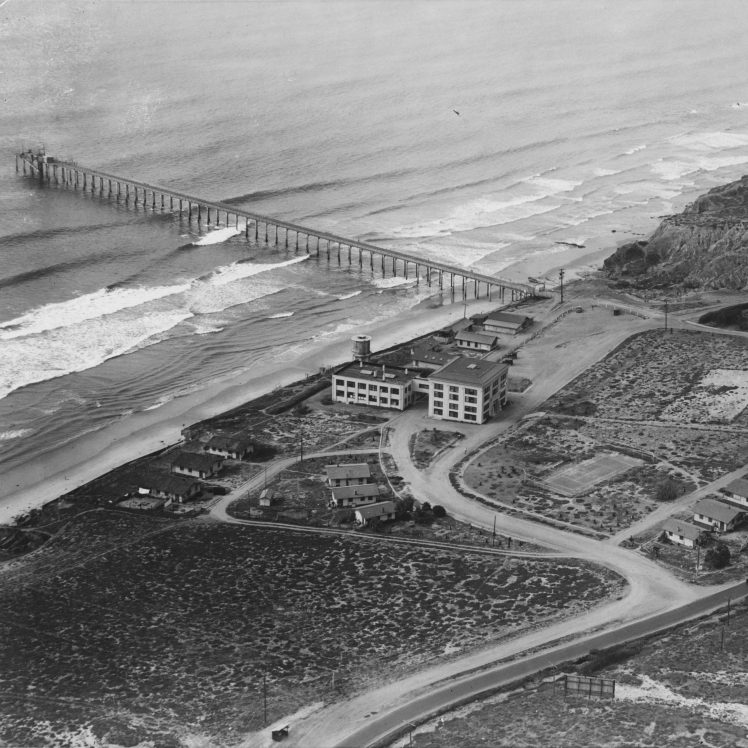
When the original Scripps Pier was completed in 1916, the site was then designated as a research campus of the university. The association was renamed the “Scripps Institution for Biological Research of the University of California” (later to be renamed “Scripps Institution of Oceanography”), and there came a push to further expand the campus’s research capabilities.
The 1,000-foot pier, located approximately 300 feet north of the George H. Scripps Building, was completed at a final cost of $36,000, with funding again provided by E. B. Scripps.
The sole purpose of this pier, along with other facilities, was to support ocean research and ocean-monitoring records, provide public access for small boats, and help scientists understand long-term changes in coastal waters, while the pier continued to supply seawater to campus laboratories and, later on, to the Birch Aquarium.
Since the area and pier were already part of the University of California and operated by Scripps Institution of Oceanography, in 1960 they became part of the University of California San Diego. The pier remained a working scientific facility rather than a recreational pier, and the university, of course, brought in thousands of students and hundreds of teachers from all over the world.
With that said, La Jolla’s population damn near doubled overnight, and it has continued to grow, with over 25,000 residential dorms for students. As of this writing, La Jolla has around 41,000 residents, and UCSD had 45,000 students in the fall of 2016.
The researchers who use it are some of the greatest minds in the ocean bio-world, including marine biologists, biological and physical oceanographers, marine microbiologists, scientific divers, and Birch Aquarium aquarists, whose work ranges from studying plankton and harmful algal blooms to measuring ocean currents, temperature, and salinity.
Remember these keywords: 1960s, studying plankton and harmful algae.
Now This Is Where It Gets Intriguing
During the Cold War, it was widely known that Scripps Institution had some major backdoor funding from the CIA—a team led by Dr. Fred N. Spiess, director of Scripps’ Marine Physical Laboratory, made its claim to the spy game when it helped locate a lost American spy-satellite film capsule in 1971. The capsule, from a KH-9 HEXAGON reconnaissance satellite, had sunk about 16,400 feet beneath the Pacific north of Hawaii.
A few years before, in 1969, SAIC (Science Applications International Corporation) opened offices on the third floor of Prospect Plaza, right above the old Chuck’s Steakhouse on Prospect St. in La Jolla. Their offices were equipped with stainless steel and copper wire mesh in the ceiling to prevent eavesdropping, and their bulletproof/soundproof windows had the perfect bird’s-eye view right down at La Jolla Cove.
Are we beginning to see the picture?
Their main source of revenue was securing federal defense contracts as an elite collective of local scientists and engineers who heavily recruited from and collaborated with the nearby Scripps Institution of Oceanography and UCSD.
Pat D., a Vietnam Army Ranger intelligence lieutenant and recipient of the Bronze Star, was one of those in charge of security. When his shift was over, he and other employees frequented the Bratskeller Restaurant two floors down. He and others would always make comments that SAIC had a lot of “weird stuff” going on there and that they were working with Scripps on projects involving marine mammals. Other than that, he was pretty hush-hush about what SAIC did. Sadly, Pat died years later from exposure to Agent Orange.
SAIC leveraged their deep local expertise to win early naval warfare, oceanographic modeling, and acoustic submarine-tracking contracts for the U.S. Navy.
Now this is where the plot thickens.
In the mid-1960s (that keyword), SeaWorld was born and almost immediately bonded with Scripps Institution, and the two started sharing their expertise in marine life and, ironically, regional conservation initiatives.
One of the elements they also shared was SeaWorld’s animal-protection program, in which wildlife release decisions depend on an animal’s species, health, behavior, and suitable habitat. This involves responsible rehabilitation and eco-management and generally seeks to:
- Release animals into suitable habitat, normally where they were found.
- Ensure they can feed and function independently.
- Minimize habituation to people.
- Reduce disease and other risks.
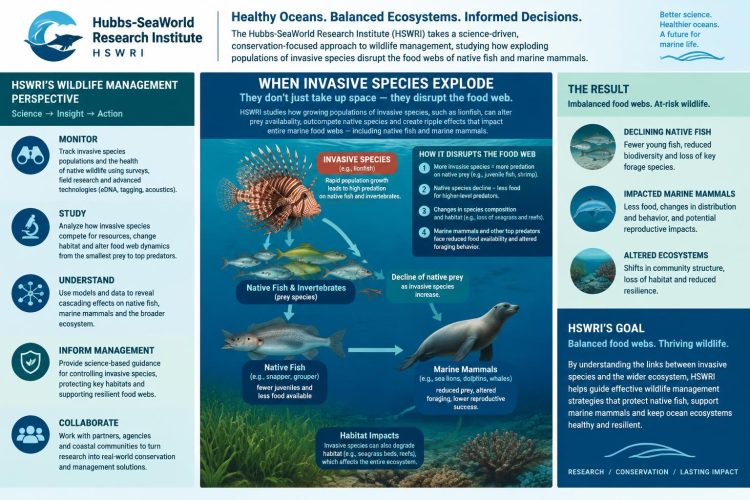
SeaWorld’s eco-managers ALSO assess the animals’ interactions with other wildlife, water quality, public infrastructure, and recreation.
Both SeaWorld and Scripps have spent decades tracking and modeling the devastating impacts of marine invaders, or, to put it simply, the consequences of overpopulation.
Scripps Research: Scripps ecologists have published numerous landmark papers on trophic cascades—like what happens when sharks or large fish are removed from an ecosystem. Without predators, populations of smaller creatures (like sea urchins) explode out of control—you know, that Circle of Life thing we just went over. The urchins then completely strip ocean floors of vegetation, creating ecological deserts known as “urchin barrens.” Scripps scientists ALSO closely monitor the spread of non-native species like Undaria pinnatifida (Asian kelp), which has heavily invaded local spots like La Jolla Shores.
Now here is the best part: Their research also focused on how these overpopulation events suffocate native giant kelp forests and destroy local biodiversity.
SeaWorld’s “private” or internal research is primarily zoological—and, like Scripps Institution’s research, focuses on managing the population density, breeding caps, and social dynamics of the animals within its own controlled park environments.
Their Hubbs-SeaWorld Research Institute (HSWRI) approaches this from a wildlife-management perspective, studying how exploding populations of (invasive) species disrupt the food webs of native fish and marine mammals.
When Institutions Talk the Talk, Seal/Sea Lion Poop Walks the Walk
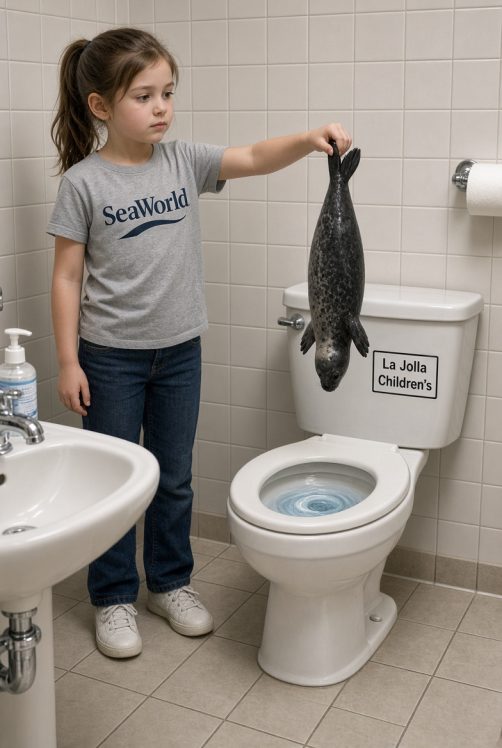
In a way, you could look at La Jolla as becoming just an eco-dumping ground for SeaWorld’s program for healthy and injured or rehabilitated seals. This is no different from dumping little Mary’s goldfish—or worse, a tropical aquarium’s invasive species, like lionfish, algae, or snails—down the toilet, where these species have reproduced, smothered native underwater habitats, and cost millions to eradicate.
All the above explains a lot of things. So, with all this biological and marine knowledge, one would think of the obvious questions:
Why hasn’t Scripps Institution spoken out about the seal/sea lion overpopulation and what it is doing to the undersea environment?
Have SeaWorld and Scripps become Gatekeepers of Information or Knowledge Hoarders?
But before we answer the questions, let’s start with Sherlock Holmes’ famous answer, “Elementary, my dear Watson,” and follow the odor timeline first.
September 4, 1997: Independent DNA testing had confirmed the seals as the source of the bacterial contamination, and the Children’s Pool was closed to water contact.
May 6, 1998: City Councilmember Harry Mathis proposed a dredging plan to remove the seal waste and restore the Children’s Pool, stating, “Unfortunately, over the past decade, Mrs. [sic] Scripps’ generous gift has been snatched away from the children of La Jolla and replaced by an invasion of seals whose excrement has fouled the water…. but I will do whatever I have to do to let the people use the beach again. There is plenty of ocean space for the seals. It’s not an easy thing to do, but it’s the right thing to do.”
April 1999: A Federal Register notice, Children’s Pool Beach Management and Water Quality Project, stated that feces from concentrated harbor seals had produced fecal-coliform counts significantly exceeding state standards for bathing beaches and body-contact areas. It also reminded everyone that on September 4, 1997, DNA testing had confirmed the seals as the source of the bacterial contamination and that the pool had been closed to water contact.
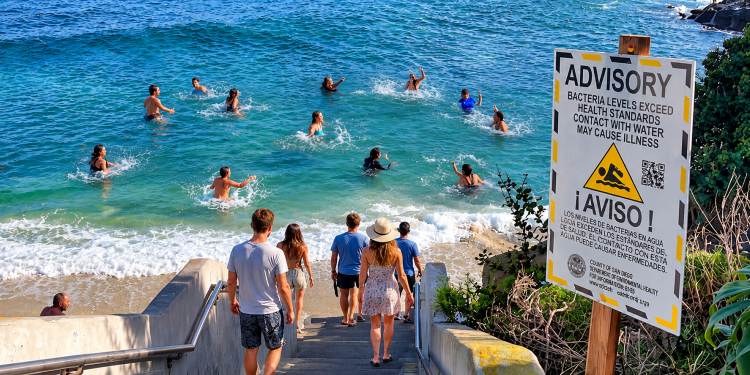
February 24, 2003: Congressman Scott Peters publicly announced his intention to revive former City Councilmember Harry Mathis’ 1998 dredging plan.
March 21, 2003: The County Environmental Health Department informed the city that the status of the Children’s Pool had now changed from “closed” to “advisory,” since the water contamination was not due to a sewage spill.
The public was now advised that they could enter the water at their own risk.
But this is the one that really gets you saying, what in God’s name is wrong with you?
A California Coastal Commission fact sheet issued in 2019 lists Children’s Pool as impaired by indicator bacteria, using the 2016 impaired-waters list … now wait, here is the killer quote that would even get Sherlock Holmes scratching his head … they identify potential pollution sources as “unknown.”
Now you would think UC Scripps, which has done a ton of research and has experts on what happens when overpopulation starts to destroy the ecosystems of (those keywords) plankton and causes harmful algae, would set up a press conference warning the public about the potential damage.
Like any government department, they went with the Coastal Commission’s narcissistic narrative.
A UC San Diego–hosted article about the Cove in 2022 said the ultimate cause needed further research and cautioned that blaming seals/sea lions alone lacked substantial supporting research.
So here we have it. Signed and Sealed in Seal Poop.
Two world-renowned marine institutions, experts in the field of marine pollution and overpopulation, are now washing their hands (major pun intended) of the filth that they can see, touch, and smell.
Suddenly, there is nothing to substantially support identifying seal/sea lion pollution as the source of this “unknown” poop.
My hat’s off to this absolutely brilliant word-salad answer!
The Next Eco-Thriller or Eco-Conspiracy Thought
Back in the 1970s, Prospect St. was the center of La Jolla’s nightlife. So, it didn’t take long for all the barflies and patrons to know what SAIC did—and about their connection to Scripps Institution and SeaWorld’s supplying dolphins and sea lions to the U.S. Navy’s Marine Mammal Programs, which trained these animals for nonlethal defense, security, and recovery missions.
So, rumors were always spreading about their role in the defense world.
We all know governments have tried to weaponize Mother Nature. The seeding of clouds. Agent Orange. Then we get into Project 112, which was a classified U.S. military testing program from 1962–1973 (do these dates ring a bell?) involving biological and chemical warfare-related tests, including the study of effects on people, animals, and plants under different environmental conditions.
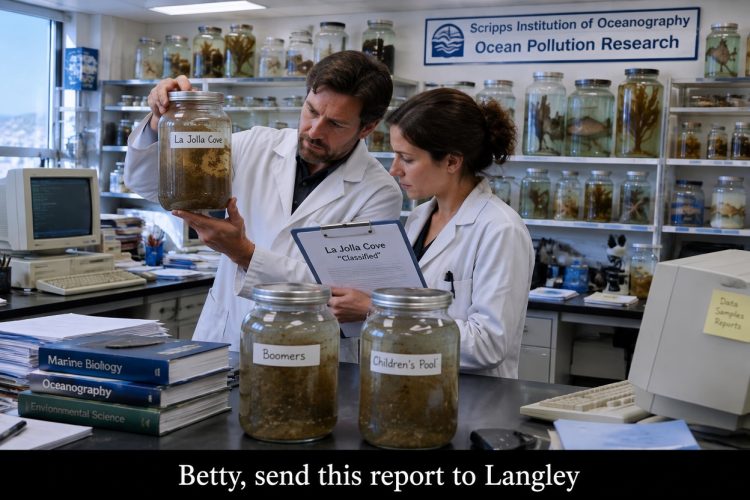
In the mid-1990s, when the Seal Battle was heating up, rumors started to spread.
Now let’s take everything into consideration; it’s easy to develop a conspiracy script for the next blockbuster movie—planting animals in what was a small, unknown town at the time, with an ecologically balanced environment, to see how long it would take before the whole ecological system broke down and how the public would react to it.
Then you add local college protesters to gain sympathy, keep the problem in the public eye, and hide the true cause while raking in millions of taxpayers’ defense dollars.
Was La Jolla just a research area testing the results of Project 112?
SAIC left San Diego in September 2009 and split their administrative services between McLean, Virginia (often associated with Langley. Hmm. Isn’t Langley where the CIA is located?), and Washington, D.C.—all this when the seal/sea lion controversy was really heating up.
It’s a nice conspiracy theory—whether or not there is some truth to it. If there were a top-secret research project, it would be buried deeper than the whereabouts of Jimmy Hoffa’s body or who really shot JFK.
So, let’s move away from the pricey tickets for the next Mission: Impossible movie and go with free admission to the next coming attraction.
An Eco-First: Poop Becomes a Free Tourist Attraction
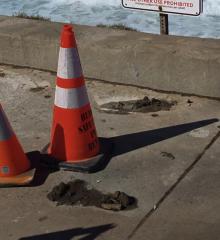
But you’ve got to hand it to La Jolla: they jumped on the smell just like San Francisco’s human poop and went a step farther by adding illegal vendors—those without health or business permits who have jeopardized local businesses that pay thousands in rent, utilities, and business licenses.
Just like the bison, seals/sea lions have now become a tourist attraction, except one has to navigate around all the sea lion poop on the sidewalk.
It’s a good thing they mark it with orange/red cones so it doesn’t squelch between the flip-flops while you’re enjoying the fresh scent of poop, but without the discarded used needles—well, as of yet.
But unlike Catalina, these vendors at first were shut down by local regulations, BUT the GOVERNMENT’s California Coastal Commission ruled their activity legal—thus making La Jolla nothing more than a Swap Meet of Cheap Carny Products.
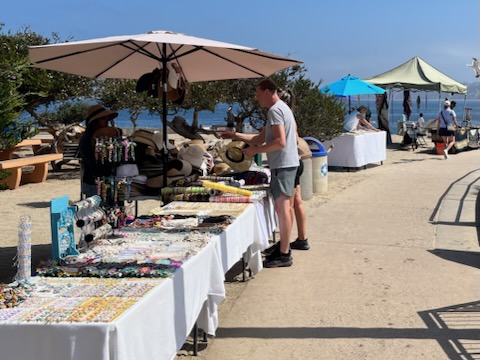
Now tourists come for the smelly attraction and stay because they are physically weighed down by a 10,000-calorie funnel cake, corn dogs, churros, and a knapsack full of ten-cent trinkets that they bought for $20 each. I almost forgot, let’s add the warm $15 bottle of water they bought from some vendor who expected a $5 tip from the $20 bill they gave him.
You’ve got to love capitalism.
Locals are now calling La Jolla “La Basurero,” which means “The Trash Dump” in Spanish.
Get the picture? It’s not about the seals/sea lions; it’s all about supporting illegal businesses, using the area as a tourist attraction, and picking the almighty tax dollars out of tourists’ pockets.
Compare Catalina Island Mule Deer to La Jolla Harbor Seals and Sea Lions
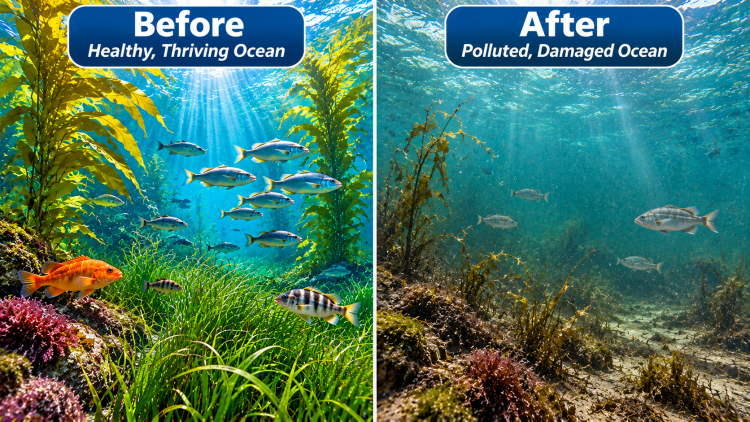
California’s coastal wildlife disputes deserve massive attention, but to be fair, seals and sea lions at La Jolla are not necessarily equivalent to introduced mule deer (and all the other animals) on Catalina.
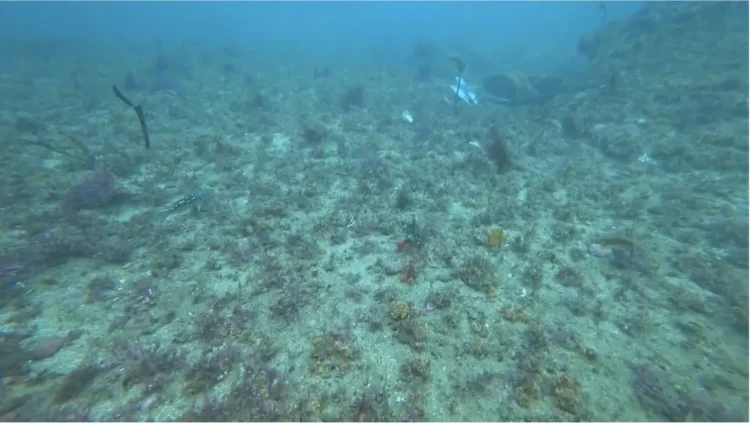
The big difference: on Catalina, one can see the abused plant life, but in La Jolla, the view for sightseers is conveniently camouflaged underwater by this thing called the Ocean.
Eco-example #1: Not a single credible government or private organization has taken the initiative to monitor the decline of natural sea life in La Jolla—only ocean contamination.
Eco-example #2: No one will take documented testimony seriously from older divers and beachgoers who will tell you that before 1980, La Jolla’s ocean floor was thick with green eel grass, ran wild with sea life, and offered ocean visibility of 60 feet or more on just about any given day. Not anymore.
In the mid-1970s, it was common to see huge schools of yellowtail and shoals (schools) of squid just a few hundred yards offshore. Not anymore.
The once-thriving and protected Garibaldi fish has almost disappeared off the Cove and Children’s Pool.
The broader comparison is about a lack of eco-management and, most importantly, exploiting human narcissistic expectations and ecological realities.
Critics claim the underlying biology differs.
Yeah, I guess we can agree, paraphrasing Paul Revere’s ride: one is by land (dry), the other is by sea (wet).
California’s environmental record has always withstood sarcasm and drowned critical thinking underwater or buried it deep under the dirt.
Again, keep in mind, both Catalina and La Jolla were the perfect examples of ecological balance and a biodiverse environment that, under California’s leadership, have been epic fails.
Catalina’s case is a lot simpler; it is a mix of both private and public elements, so eco-decisions don’t necessarily have to go through the BS of government red tape. But it is another book added to the library of a non-native herbivore disaster that had four previous eco-fails with the fifth one getting all the media attention and that being the mule deer. Roughly a dozen mule deer was introduced in the late 1920s as a game species, and with no native predators and a recreational hunt that never kept pace (379 deer taken in the 2024 season alone), the herd settled at about 2,000–2,040 animals across the interior for years
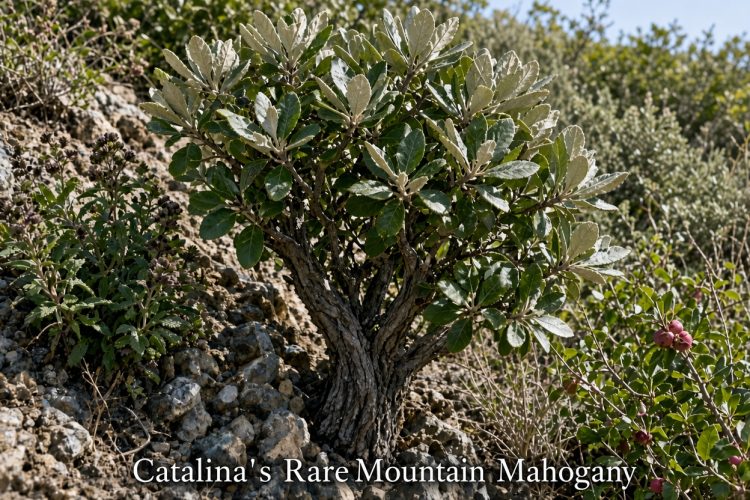
The ecological damage from the 2,000-plus deer continued and has destroyed native plants: deer browse native chaparral and endemics such as Catalina’s island mountain mahogany—arguably the rarest tree in North America and now under threat of extinction, if it isn’t already extinct. The opened ground filled with invasive annual grasses that cure fast, burn hotter, erode soil, and cut groundwater recharge, which has caused native birds and the endemic Catalina Island fox to lose cover and forage.
The deer are starving to death on the resource they are stripping; in the first removal phase (September–October 2026), crews took 670 animals from 5,300 acres at Middle Ranch, more than triple the roughly 200 projected. And according to the Catalina Conservancy, most had visible ribs and almost no body fat.
California Fish and Wildlife issued a restoration permit for professional ground-based hunters to remove the deer over four to five years, at a cost of $2,000 per deer. Then a judge declined to halt the work, which caused an outcry from animal-rights activists. The meat was earmarked for local Indians and the California Condor Recovery Program. As of this writing, no Indians have received any meat, and only a fraction of the meat went to the California Condor Recovery Program, which many suspect was due to its poor quality. Supervisor Janice Hahn, hunting groups, and the county fire chief argue that grazing deer reduce fuel loads, ignoring the fact that most of the fires on Catalina were started by arsonists and poor eco-management.
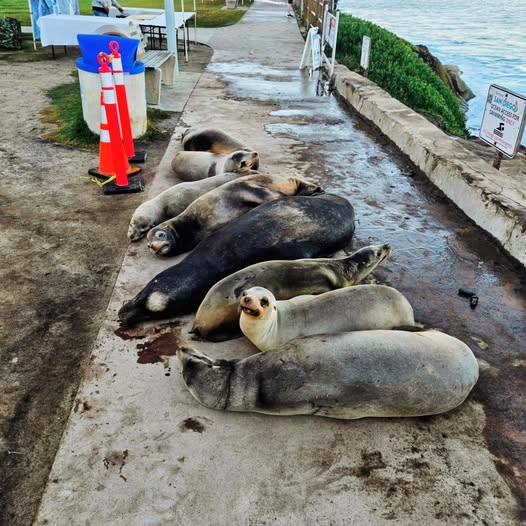
La Jolla is a different kind of conflict and deserves more attention because it’s far more complex, with lawsuits, protests, endless hearings, and bureaucrats, and we have lost count of the number of pro- and anti-seal groups that spar endlessly … but all in all, everyone is still wearing similar fur and subject to the adjudication of a government that has sided with pro-sealers.
Except the end results are always the same: they are more concerned about the mammals, the rights of illegal vendors, tourist dollars, public image, etc., etc., etc., than the threat of declining marine life below the ocean’s surface and public safety above it.
A quick review:
- Harbor seals were overly planted by SeaWorld; many think this began around the late 1970s, when SeaWorld started its animal rescue/rehab program. But it was fully documented in 1993 at the Children’s Pool. The 1931 Scripps “Public Trust” breakwater was designed for the protection of children, and for almost a hundred years, humans and sea life lived in harmony there. But later on, that trust was changed (without public debate) to favor the seals/sea lions and pave the way for what we see today.
- Unlike Catalina, it only took about five years, until 1997, before the filth and smell led the city to ban swimming because fecal bacteria exceeded state standards for human contact, with DNA testing confirming seals as the source. But ongoing pressure by radical environmentalists prompted NOAA in 1999 to falsely recognize the site as a breeding area, thus again ignoring the massive contamination the pinnipeds (from the Latin words meaning “fin- or flipper-footed”) were causing. This never should have taken place in the first place if SeaWorld hadn’t put 88% of its injured or rehabilitated seals on the beaches in and outside La Jolla.
- Then, right down the coastline, the worldwide experts in pollution and overpopulation at Scripps Institution are scapegoating. They consider the problem a local eco-management issue, which falls primarily to the City of San Diego, California Coastal Commission, and NOAA under the Marine Mammal Protection Act. Scripps adds that it is a research institution (part of UC San Diego), not a regulatory or enforcement body, so they refuse to get involved.
- Between 50 and 200 seals and hundreds of sea lions occupy the beaches on a given day and have now moved up to the sidewalks. The documented harm is real: chronic bacterial exceedances in a small, enclosed cove, odor, and the loss of a public swimming beach. And God only knows how much damage the underwater world has suffered.
- Notably, the regional water board has also turned its back, just as Scripps did, claiming it has no authority to regulate “natural sources” of waste such as seal excrement. It started scapegoating, claiming this is a land-use problem and public-health dispute, not a regulable pollution discharge.
Every day, it seems that more and more evidence is coming to the surface that the seals are destroying marine life, which will upset the Circle of Life, but this is still less important than the water-quality complaint.
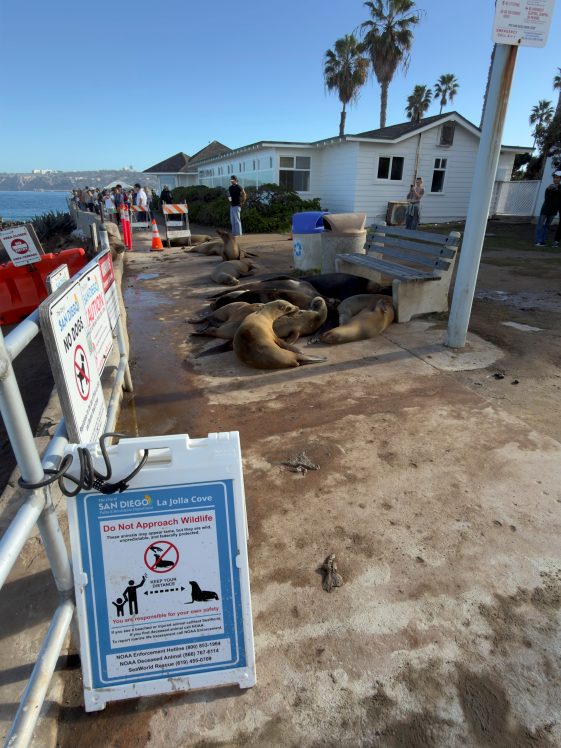
The public is still being indoctrinated to believe that the pinnipeds are and always were native predators whose overall California population is just rebounding rather than erupting. This ignores the fact that La Jolla never had a population of seals/sea lions, with the hypocrisy extending to—poop forbid—even a nano-mention of Scripps Institution’s research, the Scripps Estate Site study.
Because of indoctrination, no removal program will ever be planned—the solution in La Jolla has been adolescent, with seasonal closures, dollar-store rope barriers, and child-care monitoring.
Catalina has removed (a polite synonym for killed) non-native herbivores that are measurably degrading an entire island ecosystem and never should have been there in the first place.
Meanwhile, La Jolla changed laws, regulations, and a legal trust; neglected health, safety, and public outcry; and embraced hypocrisy so it could egoistically manage now-legally protected predators that were never really there in the first place, whose impact is concentrated on a couple of small, shared beaches.
This is why one case ends in rifle shots and the other in $50 warning zoo signs, like: don’t feed or harass the animals, and stay clear of them.
And the best: enter the ocean at your own risk.
Conclusion — Is There Hope for California? Yes, but More Likely, No
Yes: The Otay Mesa and Otay Ranch area of southern San Diego County is the perfect example of what happens when eco-minded developers work with open-minded, non-narcissistic local government for the good of eco-management. These master-planned communities have successfully balanced new housing with strong environmental protections by preserving extensive open space—often hundreds to over a thousand acres per phase—for wildlife habitat, canyons, and sensitive species under the Multiple Species Conservation Program. At the same time, they have incorporated recycled-water systems for irrigating parks, landscapes, and common areas to reduce reliance on imported supplies, and provided recreation through trails, neighborhood parks, community lakes or ponds for walking and paddle activities, plus nearby access to Lower Otay Reservoir for fishing and boating.
No: Unfortunately, when the state’s narcissistic bureaucrats get involved, it’s Congratulations, California.
Only a certified narcissist could turn damaged habitat, dead animals, and a beach that smells like a backed-up toilet into an occasion for another victory speech. Apparently, the Circle of Life now runs from mistake to committee … to consultant … to taxpayer—and back to mistake. Mother Nature gets the bill, animals and plants die, taxpayers pay for it, but at least somebody gets a commemorative seal and mule deer tote bag.
And if the public asks what, exactly, has been fixed, relax: there’s always another study, another slogan, more money that slips into bureaucratic pockets, and another ribbon to cut in front of the poop.
Just remember to smile for the cameras and call it progress. In the Fool’s Golden State, accountability is apparently the one species nobody is interested in protecting.
The last questions: Who is really laughing, and who is crying?
References
La Jolla’s Seal/Sea Lion Controversy:
California’s Man-Made Drought – 4/11/11
How We’re Protecting Catalina Island
La Jolla Cove Advocates Face Off
SeaWorld San Diego Related Research