by Kip Ives
Download a copy of this Seal Controversy
PRELUDE TO AN ECOSYSTEM COLLAPSE
The general seal population has exploded in California. California sea lions have surged from a population of roughly 50,000 in the early 1970s to nearly 400,000 today, creating a massive biological weight on coastal ecosystems that were never designed to hold them in such high densities.
This explosive growth, while celebrated as a victory for federal protection laws, has turned these charismatic animals into a heavy gear in nature’s Rube Goldberg machine. When one part of the machine grows too large, it begins to grind against the others, triggering a series of unintended (or, in this case, intended?) consequences that degrade the very water and land they inhabit. The sheer volume of these animals now threatens to stall the delicate gears of coastal biodiversity.
One of the perfect examples of this explosive growth was La Jolla, California—a little-known beach community at the time—where the question is:
Was this natural growth or man-made?
A SMALL COASTAL COMMUNITY
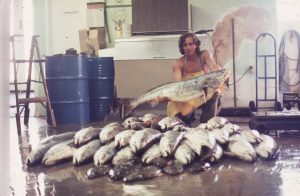
If you grew up in La Jolla before 1970, among its modest one- to three-bedroom beach cottages and family homes, you experienced something extraordinary, if not magical.
The community was home to people from different backgrounds, most of them middle-class families from all ethnic backgrounds, whose daily lives revolved around the ocean. La Jolla was more than a place to live.
The sea shaped our friendships, our recreation, and even the food on our dinner tables.
Children fashioned simple pole spears from wooden dowels, surgical tubing, and metal spearheads to get dinner.
At low tide, particularly around Bird Rock, residents searched among the rocks for octopuses, limpets, and other edible marine life.
La Jolla had more diving clubs than anywhere else in the nation, including the legendary Bottom Scratchers. These clubs were part of the local culture.
Local commercial fishing skiffs were familiar sights along La Jolla’s coast.
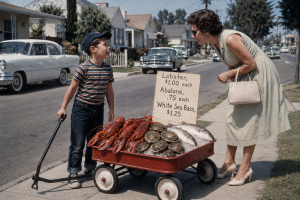 It was common to see neighborhood children pulling red wagons and selling freshly caught fish or harvested lobster and abalone door to door—sometimes for as little as $0.75 apiece—which they got from the neighborhood fishermen.
Local fisherman Tommy Doyle’s Ocean Fresh seafood business was another expression of that connection between fishermen and the community. Almost all of the seafood he sold came from off the coast of La Jolla.
A seafood barbecue could begin with a casual suggestion. Within minutes, someone would grab diving gear and head toward the water. Before long, fresh fish—and, when permitted and in season, lobster or abalone—would be on the grill.
These memories are a scientific and factual inventory of the ocean’s former abundance. But they explain why changes along this shoreline matter so deeply to those who grew up here.
Then there was nothing better than smelling that crisp, ozone-fresh salt air, with its holistic healing effects and mineral absorption to help restore mental and physical balance. Or taking a dip or a swim to help relieve stress, improve sleep and blood circulation, and put you in a better mood.
We were not simply visitors to the coast. The coast was part of our lives.
Unfortunately, and sadly, all of this changed because of a generous gift to children over ninety years ago.
THE CHILDREN’S POOL: A GIFT WITH A CHILD PURPOSE
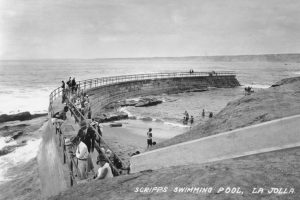 The Children’s Pool (a.k.a. the Casa Pool) owes its distinctive character to Ellen Browning Scripps, who financed the seawall that opened in 1931 and put it into a trust. Its purpose was to provide a protected bathing area, particularly for children.
The project represented more than an act of generosity. It established a lasting public expectation that this stretch of shoreline would serve the community.
She also stipulated in the trust, when building the wall, that the Casa Pool would be a public park and recreation facility and that the city and state would promote water quality and safety and clean the beach and adjacent areas to make it attractive for public use. And for almost seven decades, residents respected and honored her stipulation.
J. B. Pendleton, president of the San Diego Board of Playground Commissioners, acknowledged the generous gift by Miss Scripps and expressed the full cooperation of the city in the construction and maintenance of the resulting Children’s Pool.
Children’s Pool is a unique and rare resource in California. It was dedicated and entrusted to San Diego as a children’s bathing pool through a State Tidelands Trust and codified as state law in 1931. The beach was maintained in pristine condition for most of its existence by the City of San Diego to make it a safe place for children.
No one even imagined what a controversy it would become years later.
CONTROVERSY: LA JOLLA NEVER HAD A SEAL POPULATION UNTIL 1980
Seals/sea lions favor rocky beaches, bays, inlets, cliffs, jetties, sandy shores, and a protected environment where they can haul out in large, noisy groups.
If we go back to historical recollections, let’s ask a couple of questions.
- Were there any personal statements or records indicating an abundance of seals/sea lions in La Jolla before 1980?
- Were there any complaints or recollections of nasty smells?
Only one answer: No, there aren’t.
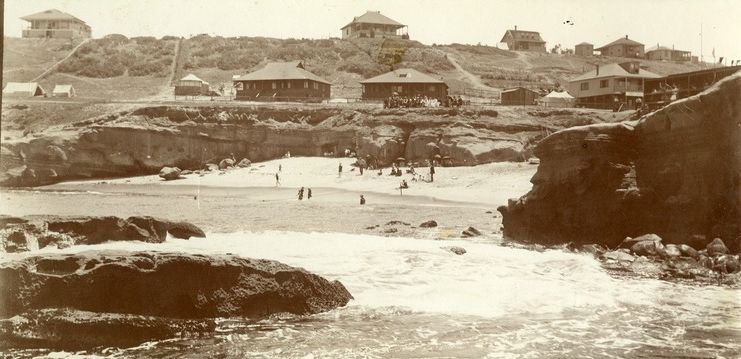
Even photos taken of the Cove/Casa Pool before and after the construction of the Casa/Children’s Pool never showed seals like those we have seen in the past forty-five years.
In other words, seals were scarce along the La Jolla coast, and sea lions were rarely seen because of La Jolla’s unique geographical location, which kept its ecology balanced.
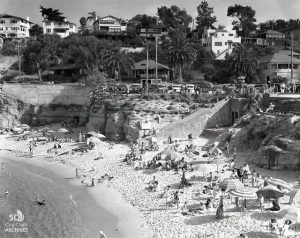
Those documented memories are historical proof that seals were almost absent from the Cove, Boomer, or Children’s Pool and definitely not present in large, noisy groups as we see today. Even if harbor seals are native to the region, let’s also take into consideration the factual evidence of La Jolla’s Indigenous people.
Archaeological finds and studies clearly show that seals/sea lions were not abundant in La Jolla. There is no evidence of seal-pelt clothing, tools made out of bones, seals in the diet, etc.
In 1961, George Shumway (oceanographer and marine geologist), Carl L. Hubbs (world-renowned ichthyologist and marine biologist whose sprawling interests included paleoclimatological history), and James R. Moriarty (illustrator, marine researcher, anthropologist, and archaeologist who became a foundational professor of history and archaeology at the University of San Diego) co-authored a highly influential, seminal archaeological study titled Scripps Estates Site, San Diego, California: A La Jolla Site Dated 5460 to 7370 Years Before.
Their research reported the conspicuous absence of marine mammals at the Scripps Estates Site in La Jolla.
This was one of those scientific studies that pro-sealers do not want the public to see because it challenges their battle cry and propaganda narrative: “Seals/sea lions have always been there.”
IT’S NOT COOL FOR HUMANS TO MESS WITH MOTHER NATURE
A sudden boom in an animal species that used to be rare or absent in an area, as was the case in La Jolla, usually means that one or more eco-factors changed the population.
The first change occurs through nature: They arrive in greater numbers, as in a massive migration. Breeding animals can become numerous when conditions are good, when they find unusually favorable conditions, or when there is a lack of predators, disease, or competition. In nature, this is often called ecological release.
Then we have humans. There are two situations in which animals are intentionally released into nature, broken down into the Good and the Bad (there is no Ugly).
A) Good—Assessing their interactions through Eco-management, such as rescuing and releasing an injured or rehabilitated animal back where it came from and/or trying to save an endangered species by planting and protecting its members, which falls under ecological release.
B) Bad—Planting or seeding animals without Eco-management, resulting in overpopulation that threatens the Eco-structure or, in this case, ecological malice.
Three major human developments reshaped La Jolla’s relationship with marine life during the second half of the twentieth century.
- SeaWorld opened in 1964, and shortly afterward it became associated with marine animal rescue and rehabilitation.
- The La Jolla Underwater Park was established in 1970.
- Two years later, the federal Marine Mammal Protection Act introduced broad protections for seals, sea lions, and other marine mammals.
In the case of SeaWorld’s animal protection program, wildlife release decisions depend on an animal’s species, health, behavior, and suitable habitat. Then there is applicable authorization: an official legal permit, license, or letter issued by a governing federal agency that grants permission to bypass a strict wildlife ban for specific, approved reasons. This authorization is not necessarily a blanket one but can be issued on a case-by-case basis.
Applicable authorization also involves responsible rehabilitation and Eco-management and generally seeks to:
- Release animals into suitable habitat, normally where they were found.
- Ensure they can feed and function independently.
- Minimize habituation to people.
- Reduce disease and other risks.
Eco-managers must ALSO assess their interactions with other wildlife, water quality, public infrastructure, and recreation.
But did they when it came to La Jolla?
ECO-MANAGEMENT—WHY IT ECO-MATTERS
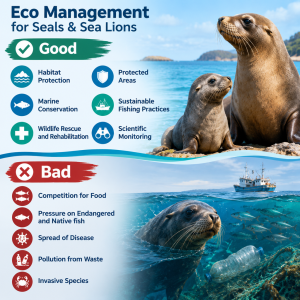 As in all animal rescue programs, injured animals that are rehabilitated and released back into the wild are typically returned to the location where they were found due to several important factors related to their natural behaviors, instincts, recovery, and survival.
Familiarity with Habitat: Animals have a strong instinctual connection to their home territory, which includes knowledge of food sources, shelter, and potential threats. Releasing them in the same area helps ensure they can navigate their environment effectively upon return.
Social Structure, Specific Behavior, and Species: Many species rely on social structures for survival. For instance, animals that live in groups, such as certain birds and mammals (like seals), may have established relationships with others in their original location. Releasing them there increases the likelihood of reintegration into their social groups.
Legal and Ethical Considerations: Wildlife rehabilitation is governed by laws that often stipulate that animals should be returned to their natural habitats after successful rehabilitation. This practice is not only ethical but also aligns with conservation goals aimed at maintaining local wildlife populations.
Species-Specific Needs: Different species have varying requirements for survival post-rehabilitation. For example, some animals may have specific dietary needs or habitat preferences that are best met in their original location.
Prevention of Imprinting: Rehabilitators take care to minimize human interaction during the recovery process to prevent animals from becoming too accustomed to humans, which could hinder their ability to survive in the wild.
When the La Jolla Underwater Park & Ecological Reserve was established in 1970 by the City of San Diego to protect marine life, it was divided into two parts: the Ecological Reserve and the Marine Life Refuge.
The keywords here are “Reserve” and “Refuge.” We will learn how this plan was taken advantage of, and it was not good.
THE CHANGE WAS FIRST NOTICED BY THOSE WHOSE LIVELIHOODS DEPENDED ON THE SEA
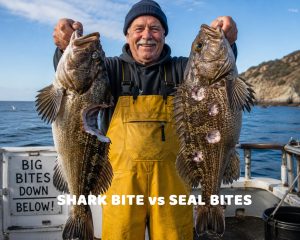
Local and legendary fishermen like Donny Tomlinson, Dave Calaway, Whitey, and others who all started fishing La Jolla in the late fifties and early sixties started to see a change in the late 1980s.
Setting nets before reaching and outside the ecological zone off La Jolla Cove, they had very strong recollections: They started to bitch about declining catches.
Those who knew Donny or Dave knew it was not good to be around them when they bitched about seals.
It first started when they pulled up their nets and found golf-ball-sized bites in their catch, and it wasn’t sharks. They also had more and more frequent encounters with seals around their fishing activity. Many of them started carrying seal bombs to frighten seals away. This was common practice with commercial tuna boats.
Even local recreational sport-fishermen, like the author, noticed that seals were now swimming around their catch, and some even took chunks out of their catch when they pulled their lines in.
Divers started having the same problem, but it was a bit scarier when a seal would suddenly try to snatch their catch out of their hands.
These observations deserve attention and raise some very serious and most reasonable questions:
What changed in local marine life? When did it change? And which pressures contributed most?
THE IRONY OF ECO-HYPOCRISY
But before we get into “What Changed,” let’s get into “What Did Change,” and that will take us back to 1928 (two) and 1930 (eight), when a total of ten mule deer, not native to the area, were deliberately brought to the island of Catalina as game animals for sport hunting, under a state fish-and-game permit. Note: This is about the time the Children’s Pool was built.
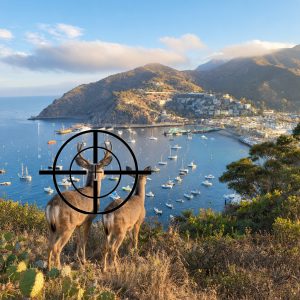
Once introduced, they had no natural predators and could not leave the island. Hunting permits were limited, so their numbers grew rapidly—historically to around 2,000–2,500 within a decade.
Now we add grapevines on Catalina Island, which were also not native plants and were first planted in March 2007. Non-native mule deer are known to browse and feed on the tender foliage, stems, and young vines of these non-native grapes.
Tensions over the deer eating vineyard crops and damaging native plants led to a major controversy in late 2025.
The Catalina Island Conservancy and California Department of Fish and Wildlife say the deer must go (but not the grapevines—the hypocrisy part) because the deer are also destroying native shrubs, trees, and seedlings so heavily that, in some areas, these native plants cannot regenerate.
Now here is the irony:
California made revenue off hunting licenses (which were supposed to control population growth), but the population was not monitored, resulting in poor Eco-management and massive overpopulation. Now, they have to slaughter the deer at a cost of about $2,000 per deer (paid by taxpayers) by utilizing professional marksmen, which has sparked a major outcry.
Now, let’s get into “What Changed?”
Like Catalina, by the late 1980s, the public also started to see a surprising increase in the seal/sea lion population at La Jolla’s Cove, Boomer Beach, and Children’s Pool.
And for the first time ever, these mammals were now using the beach and becoming more accustomed to their new home and, in some cases, aggressive or protective of it.
With that said, they started to become an attraction to local media, locals, and tourists. This started the long and frustrating Eco-arguments.
From this point on, we will see how this unfolded.
First came the ecological dispute: People either welcomed the NEW habitat or argued that the animals were NEVER there in the first place, because now the seals were starting to cock-block humans from swimming, diving, and using the beach for recreation. In fairness, much of this was mother seals protecting their young from humans.
The discovery of a tagged seal (around 1993) really set the ball rolling, and things started to heat up.
With that said, more and more people started to go to the Children’s Pool, not necessarily to enjoy the ocean but to see and, if possible, pet the cute seals as if it were some commercial petting zoo or park.
By 1995, a sizable colony of harbor seals pretty much inhabited the beach.
It was just a matter of months before the real shots were fired.
ECO-SHOTS FIRED
The first shot was fired around late 1996 by a pro-seal activist from the huge eyesore condo high-rise 939 that overlooks the Children’s Pool, where she would sit on her balcony with a telescope and watch the seals and people. If anyone got close to a seal or “looked” like they were taunting one, she would call the environmental group Friends of the Seals, which later changed its name to Seal Conservancy, a nonprofit, in 2000.
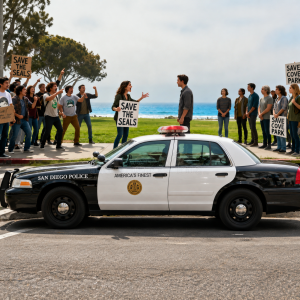 Within minutes, a few members would put on their Gucci sweats and hightail it to the Children’s Pool and harass the people. Then a few more pro-sealers started showing up at the Casa and Cove with their battle-cry signs: Save the Seals.
The battle really gained some Eco-traction when a group of swimmers (probably training for the Rough Water Swim) were swimming to the beach, where a bunch of seals were sunbathing.
Suddenly, the seals got spooked and, in a whirlwind of panic, took off into the ocean. The next thing La Jolla knew, instead of a few pro-sealers, there were a bunch of Gucci sweaters, and they had it out with the locals, which got the attention of national media.
One of the anti-sealers, Ottis Benton, got into a yelling and screaming match, and the confrontation turned into a pushing and shoving match. For the first time, the police were called, and Ottis was threatened with arrest.
By now, the wives of two very famous, legendary surfers—Melinda Merrywhether (Mike Hynson) and Donna Frye (Skip Frye)—were active in the preservation of beaches in La Jolla and Pacific Beach. Melinda started Friend of Windansea in 1997, and Donna became concerned with coastal water pollution problems when her husband repeatedly became sick after surfing.
Both women saw the problems with the seals. So much so that, when Donna wanted to run for San Diego City Council in 2001, she asked for Melinda’s support. Melinda, with an open heart, welcomed her since she thought that Donna would be a great defender of what Scripps intended: a safe area for families to enjoy the beach.
To make a long story short, Donna’s intentions were not what Melinda expected. When Donna got elected, she took the side of the pro-sealers. When Melinda confronted her, Donna flatly said, “I did it to get elected,” which created animosity in their long-standing friendship.
The civil war now started. The red line was drawn. People picked sides. Propaganda started.
THE INTERNET ECO-PROPAGANDA
 By 2001, one major invention came into play: the internet. Social media platforms spread faster than STDs in Tijuana whorehouses.
Pro-seal content started appearing on such sites as 4chan, Digg, Reddit, and, later on, Twitter and Facebook, and support for the seals grew at an alarming rate. 4chan was the most ruthless.
They all failed to take into consideration what the agreement among Scripps, the city, and the state meant, and they totally censored the environmental damage the seals were starting to cause at the time. Number one: the pungent smell.
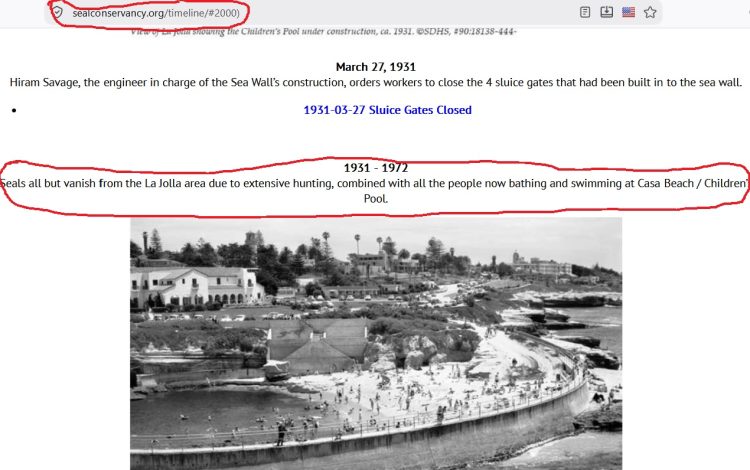
But it was the new Seal Conservancy that really started the Eco-propaganda when it put together a “Timeline of Major Events Affecting the La Jolla Seals” online, where it “claimed” that between the years 1931 and 1971, the seal POPULATION had always been there and vanished because of … wait for it … hunting and human bathing and swimming.
Hunting? Swimming? Seriously? What a bunch of Bull Seal/Sea Lion Crap! Pun intended.
This was just plain Ecology Propaganda 101, formatted after their radical god Saul Alinsky’s book Rules for Radicals. Even back then, it only took a three-minute trip (well, twenty minutes trying to find a parking spot) to the La Jolla library, where one would learn that the only hunting of seals in Southern California was in isolated cases up in the San Miguel Island and San Pedro areas, and that was stopped in the early 1900s.
Local recollections, photographic records, and the Scripps Estates Site research were buried and/or burned like Hitler did to books, eliminating factual opposition.
This scathing false narrative went viral through a bunch of Karens, and the controversy grew at an alarming rate into something of a hateful rant.
THANKS TO THE FREEDOM OF INFORMATION ACT—LEAKED DOCUMENTS—ALL HELL BROKE LOOSE
If there was one good thing that happened during these protests, people started to look deeper into the heart of the problem: SeaWorld. The internet helped provide that information.
Uploaded documents, photos, and chats (more like raging rants) about the seals (pro and con) started to become daily posts on social media sites that were uncensored at the time, like Digg and Reddit.
When that one seal was found to be tagged at the Children’s Pool, this raised the first red flag in the posts.
Then SeaWorld was seen releasing an injured and rehabilitated cow at La Jolla Cove. This caused an internet firestorm of red-flag chats.
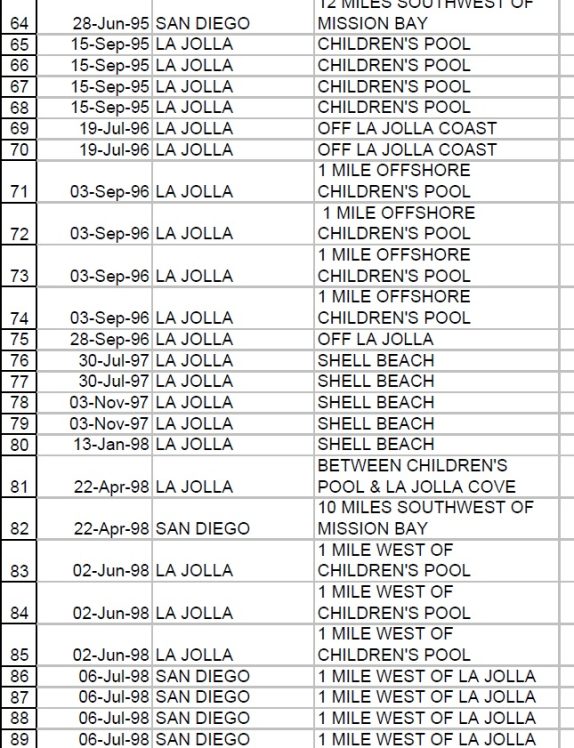
One uploaded document that added gas to the firestorm showed that a female harbor seal was released on September 15, 1995, with the handwritten locality “on the beach at children’s pool” and a note that the animal was also flipper- and radio-tagged, with no location given for where it was found.
Since that time, numerous people witnessed SeaWorld releasing more seals into the protected area that was originally meant for humans.
Anti-sealers started to question whether SeaWorld and others were willfully violating environmental laws by seeding seals, whether they had applicable authorization to release seals, and whether the stipulation of the Scripps Trust had been violated.
But it also goes further: There is also a bit of speculation and evidence that SeaWorld worked with radical environmental groups to migrate seals into this designated area that was always meant for public use. And, of course, it’s a lot easier and cheaper to release seals from the shoreline than way out at sea, where they were originally found.
This speculation became an “all hell broke loose” fact when someone posted or leaked SeaWorld’s release records, which deserve careful study because they clearly documented what many were claiming: the misuse of Eco-management that bordered on malicious human actions.
This document (an annotated table) showed that 81% of all harbor seals INJURED in the San Diego area were released near the Children’s Pool and/or offshore in numerous La Jolla locations.
That’s eighty-one fricking percent!
 The table also clearly highlighted a series of back-to-back, very disturbing releases “off La Jolla’s Cove and Children’s pool.”
Now, quickly jumping to the future: During demolition and reconstruction of the Children’s Pool lifeguard station in 2013, the city needed authorization from NOAA (the National Oceanic and Atmospheric Administration) allowing incidental disturbance of harbor seals during construction.
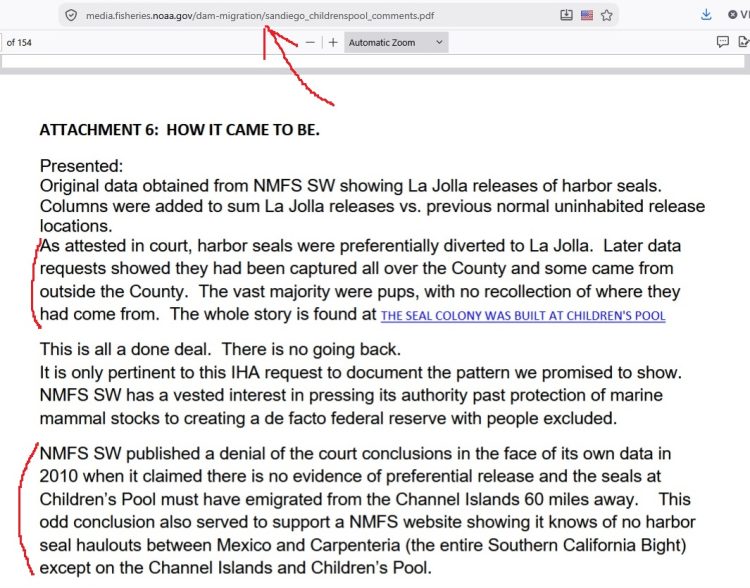
In a 154-page document (more BS eco-regulations and job security for bureaucrats, which is another story of government waste by itself), that uploaded annotated table appeared, labeled as derived from NOAA Freedom of Information Act request 2008-00188.
These documents also disclosed that many of the seals were pups and were released into the reserve (there’s that keyword again), and supported the conclusion that rehabilitated and healthy seals were also released in La Jolla—not merely somewhere in distant offshore waters where they were originally found.
Now, getting back: For all these years, SeaWorld always contended that it released seals wherever they were found injured.
This annotated table raised three very disturbing questions:
- Why did they suddenly start documenting releases in October 1989, when the program had been going on for over twenty years?
- Why were more injured seals suddenly found off La Jolla, when previously they were found off Mission Beach and Point Loma?
- Did SeaWorld intentionally try to deceive the public?
Anti-sealers started pointing fingers, claiming that SeaWorld violated nature’s rule of ecological release by:
- Releasing seals in an area that was not their original natural habitat.
- Releasing seals into an area that was clearly defined in a legal trust for human recreation.
- Allowing the population to expand in an area that was not their natural habitat.
YOU KNEW IT WAS COMING—THE LEGAL COMPLAINTS
From 1994 to the present, it became a cluster bomb of heated complaints: everything from humans harassing the seals to … water pollution caused by seal waste to … local businesses complaining that the smell was driving away business and blah … blah … blah.
So, on May 6, 1998, Harry Mathis, District 1 council member, made a bold and truthful statement: “the current Children’s Pool (odor) situation is totally unacceptable.”
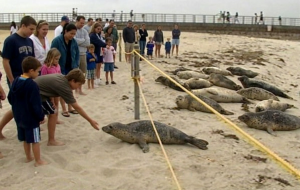
Thus, at Mathis’ urging, the City Council’s Natural Resources & Culture Committee voted 4–1 to approve directing the City Manager to apply for a Coastal Development Permit to dredge the beach and to solicit bids for the dredging in order to restore the beach to its 1941 configuration.
Then, as predicted, the pro-sealers won again—because about nine months later, the City Council voted 6–3 “not to dredge, not to shoo the seals,” and (can you believe this) its stupid remedy was to draw a Micky Mouse, “rope barrier” line in the sand (as I mentioned earlier) to protect the humans from the seals and the seals from the humans.
Humans, at first, ducked under the rope, so signs had to be posted on the rope fence for humans who could read.
The seals are still waiting for signs that they can read. LOL
As expected, this generated no fewer than five major lawsuits involving the seals.
The first one, O’Sullivan v. City of San Diego (2004–2009), involved a swimmer who argued that the Children’s Pool trust required the city to restore the area as a children’s swimming beach, including addressing sand, water quality, and seals.
O’Sullivan won, and the court ordered the city to restore the Children’s Pool to its original condition by dredging and removing the seals. It was considered an epic win. Champagne flowed.
But hold on, Buckwheat … you just knew the win wouldn’t last long …
… “somehow,” a “very convenient” state law changed the verdict. The California Legislature had the uncanny backdoor nerve ( without public debate) to amend Scripps’ 1931 state tidelands trust in 2009 without public debate, after the San Diego City Council asked state Sen. Christine Kehoe to introduce the measure. The amendment—Senate Bill 428—became effective January 1, 2010.
Instead of just a “bathing pool for children,” playground, and recreation area, SB 428 added a new amendment:
It now became “a marine mammal park” or reserve and refuge (those two keywords) for the enjoyment and educational benefit of children—in other words, a lookie-but-don’t-touchie zoo.
Needless to say, that gave San Diego discretion to allow harbor seals to occupy the site and to preserve their habitat, which they never had in the first place, while leaving the preexisting park, bathing, playground, and recreation purposes in a statutory stalemate.
As for the seals/sea lions—this was like turning a small sushi restaurant into a 24/7 all-you-can-eat buffet for Japanese sumo wrestlers. Eventually, you will run out of sushi and go out of business.
Anti-sealers called it an,” Eco-conspiracy: It’s not conservation, but neglect.”
With that said, pro-sealers appealed, O’Sullivan lost, and it became another Banana Republic win.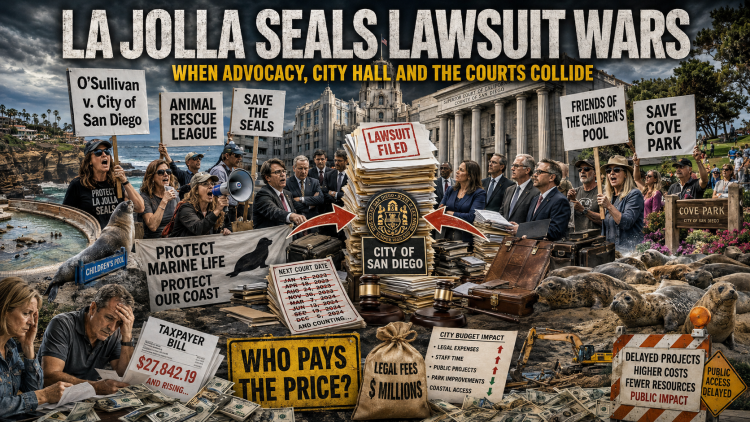
Four other lawsuits followed from 2009 to 2018: La Jolla Friends of the Seals v. NOAA (2008–2010), Animal Protection & Rescue League v. City of San Diego (2015), Friends of the Children’s Pool v. NOAA (2008–2010), and Friends of the Children’s Pool v. City of San Diego and California Coastal Commission (2014–2018).
Probably the most direct one with the most pungent smell (pun intended again) was Citizens for Odor Nuisance Abatement v. City of San Diego (2013–2017), in which La Jolla businesses and others did not merely allege—but considered the “smell proof enough”—that sea lion and bird waste odors at La Jolla Cove created a public nuisance and were hurting their businesses.
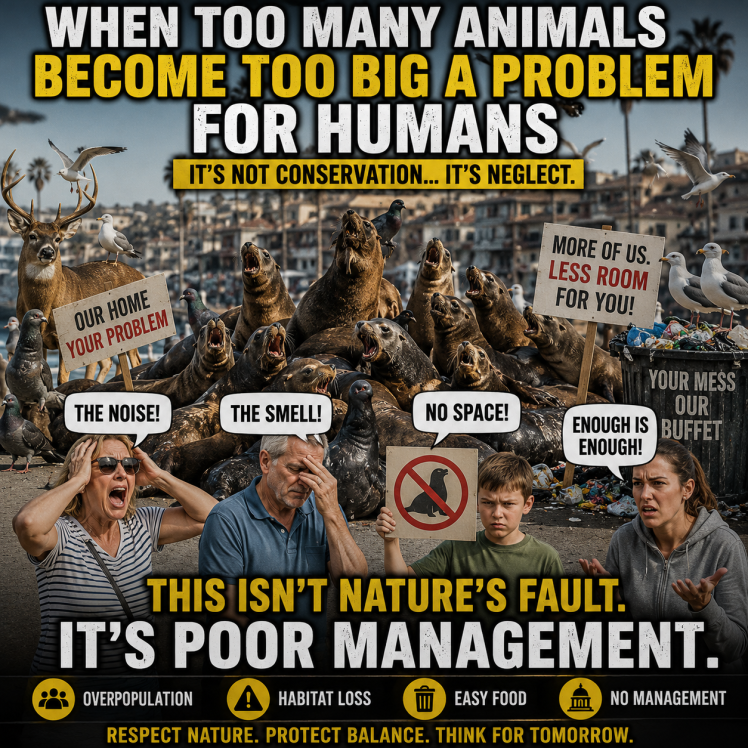 Ironically, all these resulted in a win (or was it, in reality?) for the seals and sea lions and an egoistic win for environmentalists.
But let’s not count out two other ludicrous lawsuits concerning the La Jolla Cove Fourth of July fireworks that had taken place for over 40 years—where environmental groups sued because the “noise” and “pollution” from the 30-minute, once-a-year fireworks disrupted the seals/sea lions.
Seriously, the 24/7 “noise” from the daily traffic jams, car alarms, crowds, people shouting, etc., didn’t affect the seals amid the massive flood of media and social media “lookie-loos”?
And “pollution”? Come on, people. What do you call all the waste and smell from the seals?
Needless to say, as it stands today, the practical legacy of all the litigation is:
- Seals/sea lions can remain at Children’s Pool, Boomer, and the Cove.
- San Diego can use protections such as the guideline rope.
- The city can close Children’s Pool annually from December 15 through May 15 for harbor seal pupping season.
- Efforts to compel the city to restore the site exclusively as a swimming beach ultimately did not prevail.
SO WHERE DOES THIS GET US WHEN SEAL/SEA LION COLONIES PUT PRESSURE ON COASTAL ECOSYSTEMS? PERSPECTIVES FROM INDEPENDENT ECO-EXPERTS
Pro-sealers will boast that the recovery of seals and sea lions is a conservation success.
However, let us NOT FORGET La Jolla: There was NEVER a seal/sea lion population, just as there were never any mule deer on Catalina, so the word “recovery” was just another malicious word salad, BS.
“We are seeing a fundamental shift where the sheer biomass of pinnipeds is beginning to outpace the regenerative capacity of our nearshore environments.” — Dr. Elena Vance, Marine Ecology Lead at the Pacific Coastal Institute
“The Earth in general can only support so much animal life, and for every additional pound of human beings and his animal favorites, a pound of other animal life must disappear.” — Isaac Asimov, Beginnings: The Story of Origins
How Protection Changed Coastal Populations
The Marine Mammal Protection Act of 1972 helped many marine mammal populations recover after decades of hunting and other human pressures.
Nevertheless, the issue should be: How do we protect the natural habitats of local fish, birds, people, and other marine life?
“The success of the MMPA is undeniable, but we are now entering a phase where the sheer volume of these animals is outstripping the natural checks and balances of the nearshore environment.” — Dr. Marcus Thorne, Senior Wildlife Biologist
Ecosystem Collapse on Native Fish
Seals and sea lions are natural predators. Their effects on La Jolla’s fish populations had been greatly reduced, thus causing an imbalance in the fish population. Older divers who used to catch the night’s meal within 30 minutes will tell you, “Sea life is nowhere like it used to be.” Calico bass, sheephead, perch, and cabezon, which used to be abundant in the Cove and Children’s Pool area, are no longer plentiful.
This is most consequential when local fish populations are already threatened by other natural pressures, such as habitat loss, warming water, or barriers to migration. Now add seals/sea lions, and it becomes a juggling act of managing one source of nature’s mortality … alongside another source of human-induced mortality.
“The sheer caloric demand of a recovered pinniped population creates a predatory pressure that many struggling fish stocks simply cannot withstand at current levels.” — Dr. Sarah Jenkins, Fisheries Research Lead
Disease in Crowded Colonies
Crowding can make it easier for pathogens to spread through contact, respiratory droplets, or contaminated water. Disease monitoring matters both for animal welfare and for understanding whether a colony is under stress.
“The biological reality is that high-density living creates a feedback loop of vulnerability. When you have too many individuals in one space, the immune system simply cannot keep up with the constant exposure to new pathogens.” — Dr. Elena Vance, Wildlife Pathologist
Effects on Shorebirds and Tide-Pool Life
Small coves and breakwaters can change how other species use a shoreline. Animals moving across beaches or rocky ledges may disturb nesting birds, while waste and nutrient runoff may alter nearby tide pools. Competition for forage fish is another possible concern for seabirds, although its effect must be assessed alongside other causes of changing fish abundance.
A balanced response starts with local evidence: monitoring fish runs, water quality, colony health, and nearby nesting habitat. Conservation succeeds best when eco-managers can protect recovered marine mammals and prevent any measurable harm to other species.
Odor, Food Chain, Waste, and Water Quality
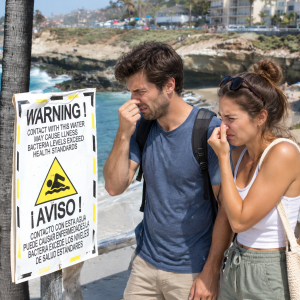 Since the turn of the century, if there is one single bit of convincing evidence and undisputed proof that harm is being done, it’s the horrible smell. Normally, pinniped waste contains nutrients that are part of a natural coastal ecosystem. However, when many animals use the same confined harbor or shoreline—or, in this case, a small sheltered breakwater and cove—waste can and will accumulate faster than tides and currents disperse it.
Can you believe this? I bet this is the first-ever timeline of Seal/Sea Lion Poop:
An April 1999 Federal Register notice, “Children’s Pool Beach Management and Water Quality Project,” stated that feces from concentrated harbor seals had produced fecal-coliform counts significantly exceeding state standards for bathing beaches and body-contact areas. It also stated that DNA testing had confirmed the seals as the source of the bacterial contamination and that the pool had been closed to water contact since September 4, 1997.
On February 24, 2003, Congressman Scott Peters publicly announced his intention to revive former City Councilmember Harry Mathis’ 1998 dredging plan, stating, “Unfortunately, over the past decade, Mrs. [sic] Scripps’ generous gift has been snatched away from the children of La Jolla and replaced by an invasion of seals whose excrement has fouled the water…. but I will do whatever I have to do to let the people use the beach again There is plenty of ocean space for the seals. It’s not an easy thing to do, but it’s the right thing to do.”
Then, the next month, on March 21, 2003, the County Environmental Health Department informed the city that the status of the Children’s Pool had now changed from “closed” to “advisory,” since the water contamination was not due to a sewage spill. The public was now advised that they could enter the water at their own risk.
But this is the one that really gets you saying, “WTH!”
A California Coastal Commission fact sheet issued in 2019 lists Children’s Pool as impaired by indicator bacteria using the 2016 impaired-waters list … now wait for it, wait … and identifies potential pollution sources as unknown.
Seriously, you’ve got to be fricking joking! Seal/Sea Lion Poop is now considered an, unknown.
LET’S SUMMARIZE EVERYTHING BASED ON ECO-REALITY
By now, I bet readers are tired and shaking their heads at all these back-and-forth ecology assessments, based on committees, organizations, town hall venting, so-called backseat experts, greedy consultants/attorneys, political promises, and rants, where most don’t know the difference between a thoughtful thought and a thunder-buster fart.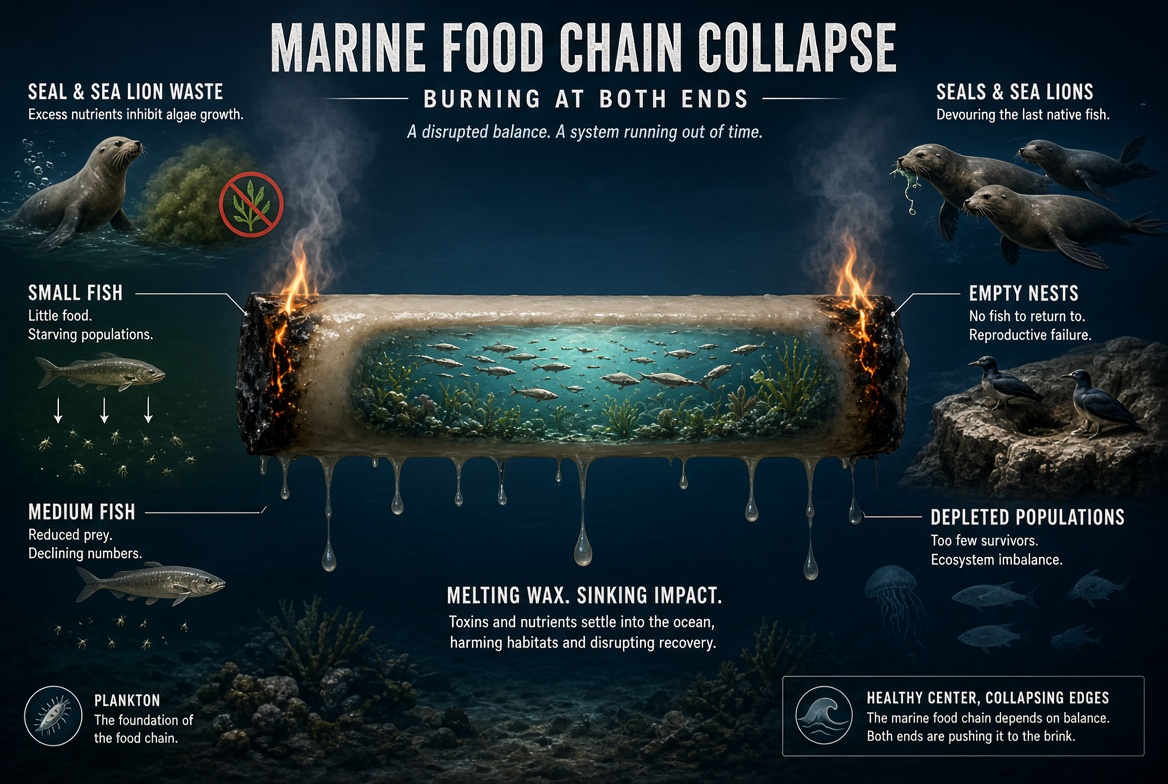
In fairness, several of these groups and people tried to solve the problem with civil intelligence but found themselves locked into a biased matrix.
So, let’s put this into an Eco-reality of what this environmental nightmare has contributed to and will continue to contribute to:
- ODOR—For over 30 years, this overpowering smell has been capable of causing burning of the eyes, nose, throat, or lungs in humans. People, especially seniors, who suffer from heart or respiratory problems, or who have diseases like cancer and are on chemo, may get stomach pains, skin rashes, and nausea, as the author of this article did when he was on heavy chemo after getting cancer ten years ago.
- FOOD CHAIN—BURNING THE CANDLE AT BOTH ENDS—Elevated ammonia from waste will slow or stop algae growth, which is one of the foundations, or starting points, of the food chain. Small fish feed on algae, bigger fish feed on small fish, and so forth. Then we have seals/sea lions eating what fish are left, thus stopping the native fish from reproducing.
- OXYGEN—When sea algae die, bacteria decompose the dead algae and consume large amounts of dissolved oxygen in the water. Oxygen can fall so low that fish, crabs, shellfish, and bottom-dwelling sea life cannot survive—creating a low-oxygen area called hypoxia, or a “dead zone.”
- BACTERIAL—Bacterial contamination from waste requires water-quality monitoring.
“When you have thousands of sea lions occupying a single estuary, the chemical profile of the water changes fundamentally. We are seeing localized dead zones in heavily used areas where oxygen levels are too low to support resident species.” — Dr. Marcus Thorne, Senior Wildlife Biologist
SO, WHAT ARE THE ECO-ANSWERS?
For La Jolla, it’s an eco-Catch-22: Seals and sea lions are federally protected marine mammals. Now add the activists and a banana republic—or a system of organized chaos and institutional failures.
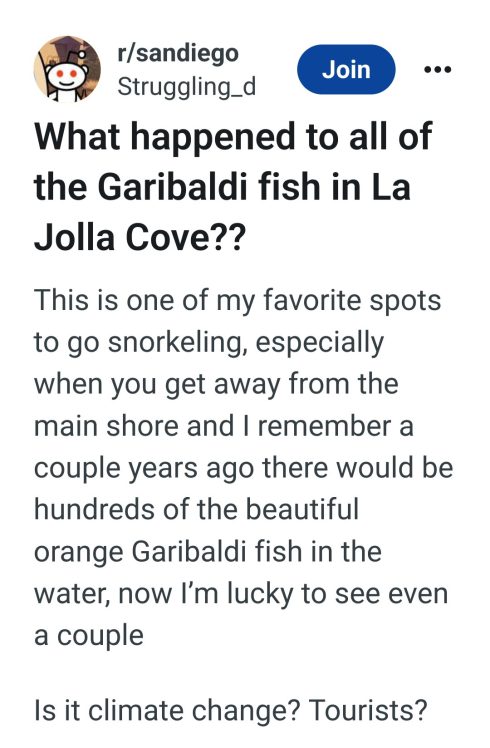
Humans cannot chase them away, feed them, trap them, relocate them, sterilize them, or kill them, as they have done in some states and proposed to do with the Bambis on Catalina (you have got to love the hypocrisy), simply because they are numerous, smelly, noisy, causing environmental/eco-damage, or just a fricking inconvenience and nuisance. Those actions can count as unlawful “take” or harassment under the Marine Mammal Protection Act, which can lead to heavy fines and/or jail.
So, the obvious question is: Should we let nature correct the wrong? Believe me, this would cause environmentalists to pee down their legs and into their Nike tennis shoes:
Predators—Every time sharks and orcas are spotted, anti-sealers’ wishful wish is that they will head to the Cove or Children’s Pool for a tasty delight. Even if more sharks and orcas have been sighted off La Jolla in recent years, California sea lions and harbor seals are fast and maneuverable, travel in groups, and often stay near rocky structures, kelp, surf, and shallow water—all conditions that can make a successful ambush more difficult or less worthwhile than targeting young seals at a major rookery.
However, there have been very few attacks on seals, but nature can be most ruthless. All it’s going to take is a frenzy of attacks, and a new food store will be open for business. Then it’s going to be a priceless Kodak moment seeing the expressions on pro-sealers’ faces when they see a half-eaten, bloody seal carcass floating in the Cove, where the whole world will see it, with a special “CHEERS, THANKS” going to social media influencers.
Disease and Parasites—This will probably have the greatest odds of being the number one killer, and disease spreads more readily when animals live in small, densely populated areas, as they do in La Jolla.
The most famous seal mass-mortality event involved phocine distemper virus (PDV), a morbillivirus related to canine distemper. It spread through harbor seals around the North Sea and European coasts:
Approximately 18,000 harbor seals died in 1988. An estimated 22,000 harbor seals died in 2002. And yes, Southern California/La Jolla is vulnerable because local animals lack immunity, seals congregate closely, food is lacking, and toxic algae pose a threat. Then we have leptospirosis, which is a bacterial disease caused by Leptospira. The 2025 leptospirosis outbreak caused record numbers of sick sea lion strandings, especially around Monterey Bay; about two-thirds of sea lions stranding with the disease do not survive.
If you think the smell is BAD now, can you imagine what it would be like with hundreds of dead, fly-covered, rotting sea lion carcasses lying on the beach?
Lack of Food—For years, the natural habitat of sea life has dwindled because of these sea mammals. The protected orange garibaldi, which used to be seen everywhere, is now so scarce that one is “lucky to see even a couple,” as one Reddit user said. So, where is the outcry? Will the garibaldi be another dodo bird? With fewer available food resources, fewer animals can survive and reproduce.
Emigration—I seriously doubt these animals will leave their crowned environment to find food or territory elsewhere. Then again, never doubt Mother Nature.
NOAA-APPROVED—Dogs—Taking all of the above into account, there is one natural way, and that is man’s faithful companion. Dogs and seals usually do not get along because they are two very different animals whose natural instincts can lead to fear, aggression, and unpredictable encounters. Dogs are territorial predators that may instinctively chase seals/sea lions when they see them moving along the beach or in the water, while seals/sea lions may perceive approaching dogs as a threat, particularly when resting on shore, protecting their pups, or defending their space.
Although seals/sea lions may appear slow and clumsy on land, they are powerful wild animals with sharp teeth and strong jaws that can inflict serious injuries on dogs. The danger also goes both ways: a barking, lunging, or biting dog can stress or injure a seal, while close contact can expose both animals to diseases and parasites.
There have been studies and some proposals to put dogs on the La Jolla beaches, going as far as installing 24/7 audio speakers to replicate barking dogs to frighten the seals/sea lions away.
ECO-CONCLUSION
This was not a lesson in how to restore nature, but a lesson in egoistic and malicious ecoism. Seeding or relocating marine animals—or any species—into an ecosystem without adequate planning, habitat protection, disease screening, or long-term population management can become one more pressure on an already stressed environment. It can or will set off a chain reaction that changes an entire ecosystem.
This leaves native species paying the price for a human atrocity, as the problem with the Catalina mule deer has clearly shown.
Except the deer get slaughtered and seals/sea lions live, or, in shameful words:
We NOW have started to pick which species of animals get to live or die.
Pick your poison, whether it falls in line with being irresponsible, narcissistic, criminal, or all three.
The ocean is not an empty space waiting for human improvement. It is a complex living system whose checks and balances have developed over thousands of years. If we truly want to help marine life, we must consider short-term interventions with humility, natural science, and a commitment to protect, first, the habitat that native species already depend on.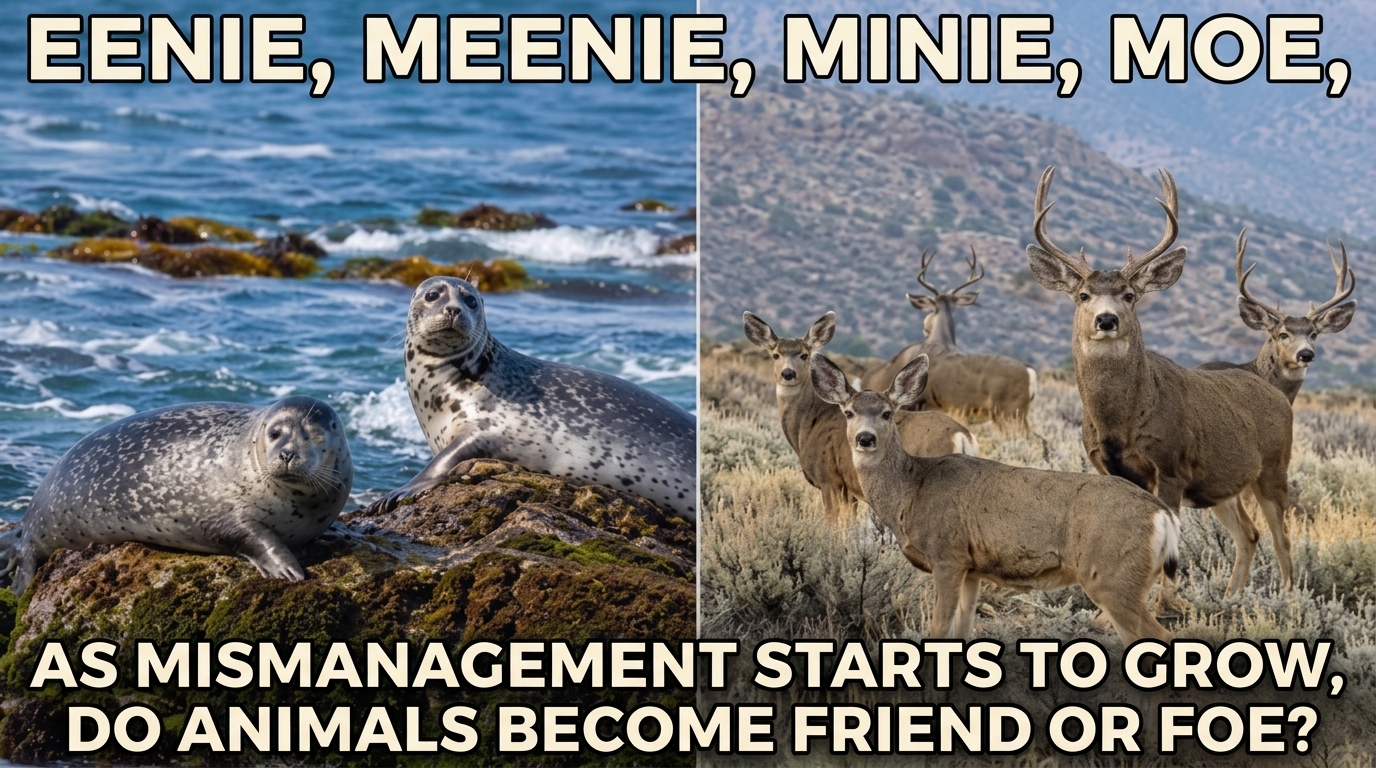
REFERENCE
NOAA Freedom of Information Act request 2008-00188
https://media.fisheries.noaa.gov/dam-migration/sandiego_childrenspool_comments.pdf
The Black Vault – Freedom of Information request from NOAA
https://documents.theblackvault.com/documents/foia/NOAA2008.pdf
Scripps Estate Site – 5460 to 7379 years Before the Present (Dec 1961)
https://nyaspubs.onlinelibrary.wiley.com/doi/10.1111/j.1749-6632.1961.tb30516.x
Seal Overpopulation is harmful to Eco-System
https://canadiansealproducts.com/blog/why-is-seal-overpopulation-harmful-for-the-ecosystem
US allows killing of hundreds of sea lions to save struggling salmon
https://www.theguardian.com/us-news/2020/aug/15/us-sea-lions-columbia-river-salmon-steelhead-trout
California Sea Lion Population Rebounded To New Highs
https://www.fisheries.noaa.gov/feature-story/california-sea-lion-population-rebounded-new-highs
See Hundreds of Sea Lions Take Over a Popular California Beach
https://www.smithsonianmag.com/smart-news/see-hundreds-of-sea-lions-take-over-a-popular-california-beach-180984986/
NOAA McInnis Letter to Donna Fry
https://kipives.com/wp-content/uploads/2026/10/2010-05-14_NOAA McInnis_Letter_to_Donna_Frye.pdf
High Court Ruling, Seals Must Go
https://kipives.com/wp-content/uploads/2026/10/2007-11-30_Seals_Must_Go_Says_State_High_Court.pdf
O’Sullivan vs. City of San Diego
https://kipives.com/wp-content/uploads/2026/10/2004-03-12_OSullivan_v_City_of_San_Diego.pdf
Full Copy of Seals Released by SeaWords – 1989-2006
https://kipives.com/wp-content/uploads/2026/10/2004-03-12_OSullivan_v_City_of_San_Diego.pdf
DND objections for FoCP by Ken Hunrichs
https://kipives.com/wp-content/uploads/2026/10/DND-objections-for-FoCP-by-Ken-Hunrichs.pdf
Release of Seal
https://kipives.com/wp-content/uploads/2026/10/rehabdisposition-at-cp.pdf
Scripps Letter
https://kipives.com/wp-content/uploads/2026/10/scripps-letter.jpg
Seal Hunting
https://kipives.com/wp-content/uploads/2026/10/seal-hunting.pdf
